
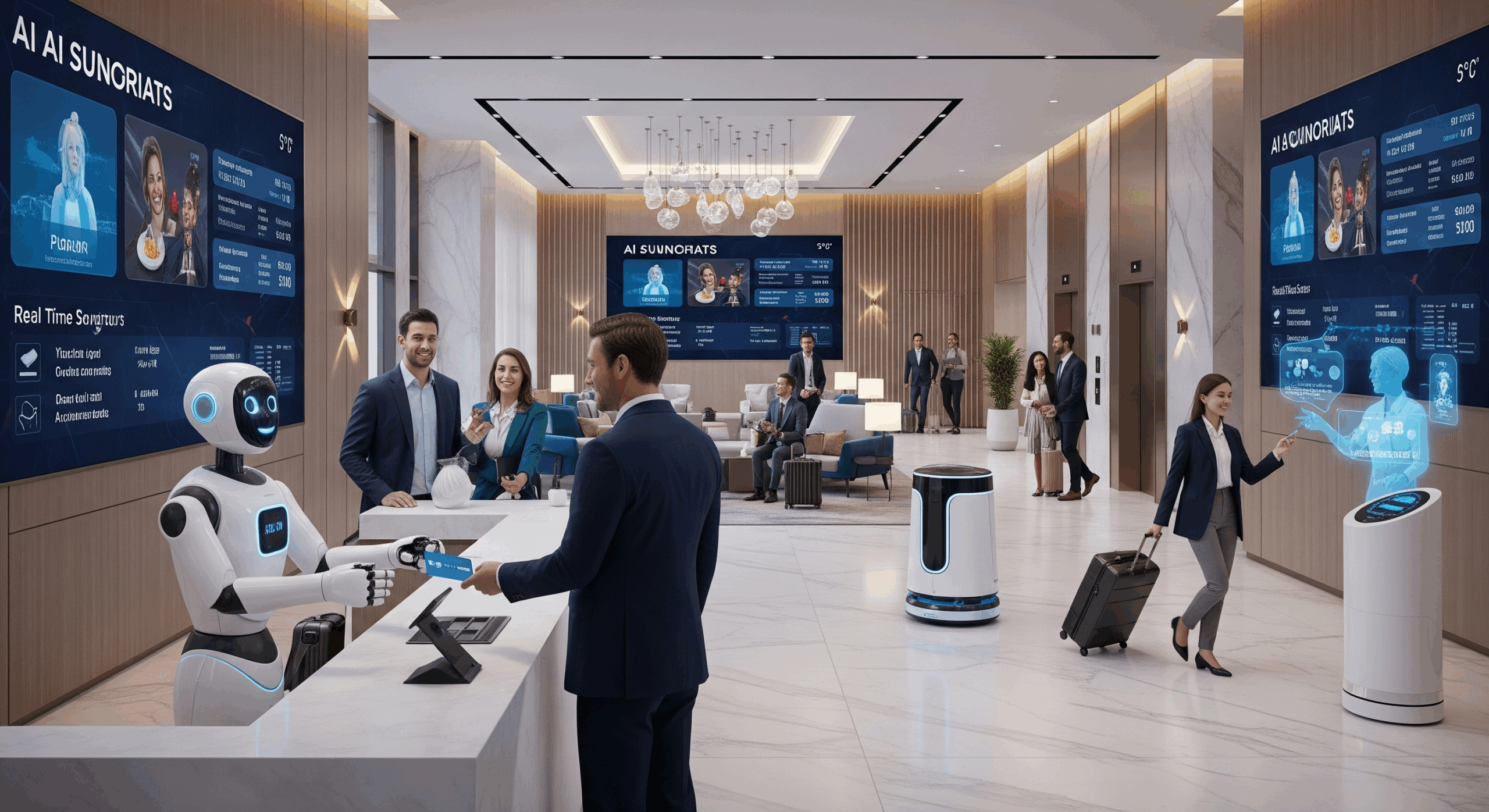
In 2025, Artificial Intelligence isn’t just a tool for hospitality operators — it’s the architecture supporting smarter, faster, more profitable decisions. What makes AI so powerful is not just what it does, but how it adapts. Here’s how industry leaders are putting that into practice.

- GUEST ACQUISITION GETS SMARTER – PROFITROOM
Profitroom’s AI booking engine doesn’t just respond — it anticipates. The platform analyses behavioural data in real time: how long a guest spends on certain pages, which room types are clicked, time of day, even abandonment signals. That data feeds into predictive algorithms that tailor offers on-screen — from urgency prompts (“Only 2 left at this rate!”) to dynamic discounts. Its AI Agent further enhances engagement by using natural language processing to field guest queries via chat or WhatsApp — then delivers contextual answers, nudges them to book, and logs data for follow-up marketing.
This is not automation for the sake of efficiency — it’s intent-driven conversion engineering.
- STREAMLINED OPS VIA CLOUD & AI – ORACLE SIMPHONY (MICROS SOUTH AFRICA)
Oracle Simphony’s cloud-based POS is more than a billing system — it’s an analytics engine plugged directly into daily operations.
Here’s how it works:
» Menu intelligence: It tracks real-time ingredient costs and suggests price adjustments for low-margin dishes.
» Sales modelling: It pulls from historic sales, current bookings, weather patterns, and daypart trends to predict sales volume.
» Labour forecasting: It analyses footfall and transaction times to recommend staffing adjustments per shift.
The system syncs data across outlets and devices, giving group operators a live dashboard of operational health and profitability triggers — no spreadsheets required.
- SPA INTELLIGENCE – SPAGURU
SpaGuru’s appointment scheduling isn’t just reactive. The platform maps out service durations, staff availability, booking histories, and guest preferences — and uses rules-based logic to suggest optimal time slots.
The AI behind it identifies high-demand service windows, recommends therapist allocation based on skill and speed, and flags inefficiencies in service duration. The result? More clients served, better pacing, and improved therapist utilisation.
- SCALABLE PAYMENTS – MOBIPAID
Mobipaid’s intelligence layer monitors payment patterns for anomalies — flagging duplicate attempts, location mismatches, or uncharacteristically high transaction values. These are assessed using AI-based rules to prevent fraud in real time.
It also reconciles payments with guest CRM data and booking flows, tagging each payment with source, method, and context — streamlining admin and giving GMs better financial visibility.
- AI THAT MOVES WITH YOU – FCM’S SAM FOR CORPORATE TRAVEL
Sam uses machine learning to absorb travel behaviour over time — learning from how travellers respond to alerts, what channels they use, how often they book last-minute, and more.
Its model then preempts needs:
» Sends visa reminders when flights are booked to high-risk destinations
» Suggests alternative flights based on route patterns when delays occur
» Adjusts support tone and timing based on the user’s device and location
For travel managers, Sam aggregates data from multiple travellers to offer visibility on location, safety risks, spend anomalies, and duty-of-care compliance. It’s AI with operational empathy — and business context baked in.
- GLOBAL INNOVATIONS MAKING WAVES
Across the globe, AI is being integrated at the infrastructure level:
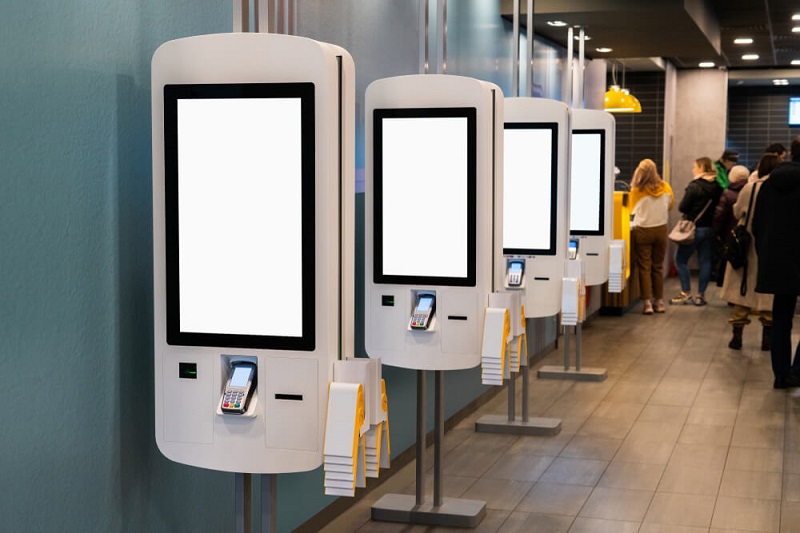 » QR menu tech uses real-time purchasing data to recommend dishes and drinks that pair well, increasing average order value.
» AI agents deployed in modular systems can be trained for guest check- ins, front desk support, and back-of-house alerts.
» Facial recognition technology enables seamless check-in experiences while automatically surfacing loyalty profiles and VIP preferences.
These are not gimmicks — they’re productivity tools with measurable impact.
- THE INTELLIGENCE BEHIND THE PLATE – HOW AI IS TRANSFORMING FOOD SERVICE
AI is reshaping food service — behind the scenes and in full view. From smarter menu engineering to predictive back-of-house systems, operators are using AI to drive efficiency, reduce waste, and enhance service quality.
Here’s how the tech works — not just what it does. In South Africa, foodservice AI is beginning to show promise with real deployments and early adoption trends. Johannesburg’s Tang Palace made headlines with Africa’s first robot waiters — Ginger, Pepper, and Rocky — now assisting with orders and service on-site. Meanwhile, regional QSR chain Hungry Lion has implemented predictive staffing and inventory tools to better match demand cycles and reduce waste.
While platforms like Presto and AI-driven voice ordering remain largely global innovations for now, they offer an inspiring look at what’s to come — and where local operators could scale soon.
KITCHEN AUTOMATION & ROBOTICS
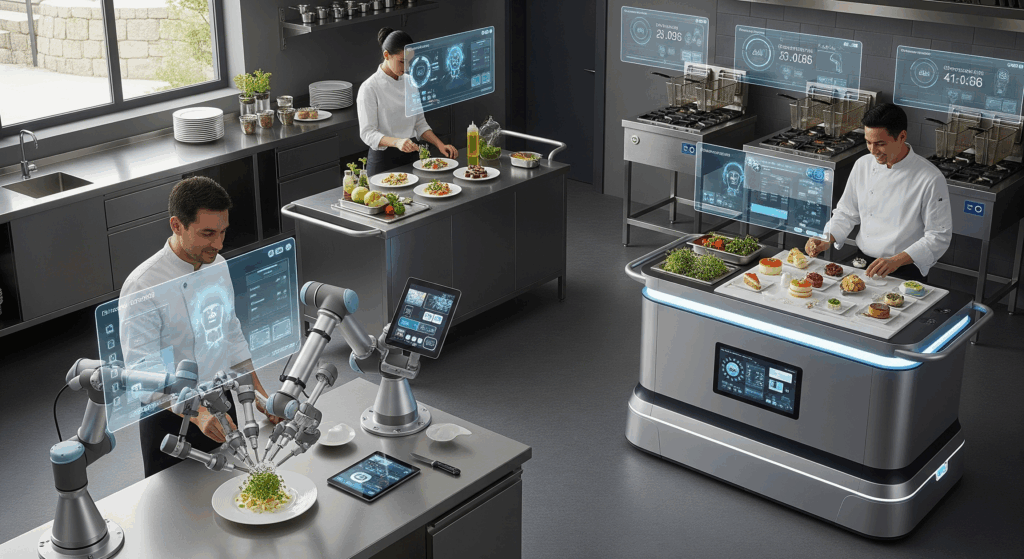
Robot chefs are no longer sci-fi. Ventures like Moley Robotics and Spyce Kitchen have introduced systems that mimic chef gestures, automate cooking sequences, and standardise plating. While not yet mainstream, they point to a future where volume production doesn’t mean loss of craft.
COMPUTER VISION & OPERATIONAL OPTIMISATION
Tablets using vision and voice AI — such as Presto — analyse guest behaviour and streamline service. These tools reduce wait times, enable on-demand orders, and alert staff to tables needing attention. More importantly, they gather performance data that supports real-time adjustments.
INVENTORY, WASTE & COST CONTROL
AI algorithms forecast ingredient demand based on sales velocity, seasonality, and current stock levels. This reduces spoilage, avoids over- ordering, and automates supplier triggers. The result is a tighter kitchen — both financially and operationally.
DYNAMIC VOICE ORDERING & UPSELL AI
In quick-service restaurants, voice AI systems are now taking drive-thru orders, recognising speech patterns, suggesting upsells, and flagging inconsistencies. These systems learn from every transaction to better anticipate preferences and improve throughput under pressure.
PERFORMANCE & STAFF ANALYTICS
Tools like Riley, already used in global franchises, analyse service interactions using audio and video. They identify top-performing staff, common missed upsells, and bottlenecks — feeding that data into team coaching and training modules.
WHY IT MATTERS FOR FOOD SERVICE OPERATORS
- Efficiency Gains: Automates repetitive work, letting teams focus on hospitality.
- Accuracy & Consistency: Eliminates variance in dish output, service pacing, and ordering.
- Stronger Margins: Reduces waste, controls cost, and sharpens upsell potential.
- Smarter Planning: Empowers operators to act on real-time, predictive data — not just gut feel.


Leave a comment