
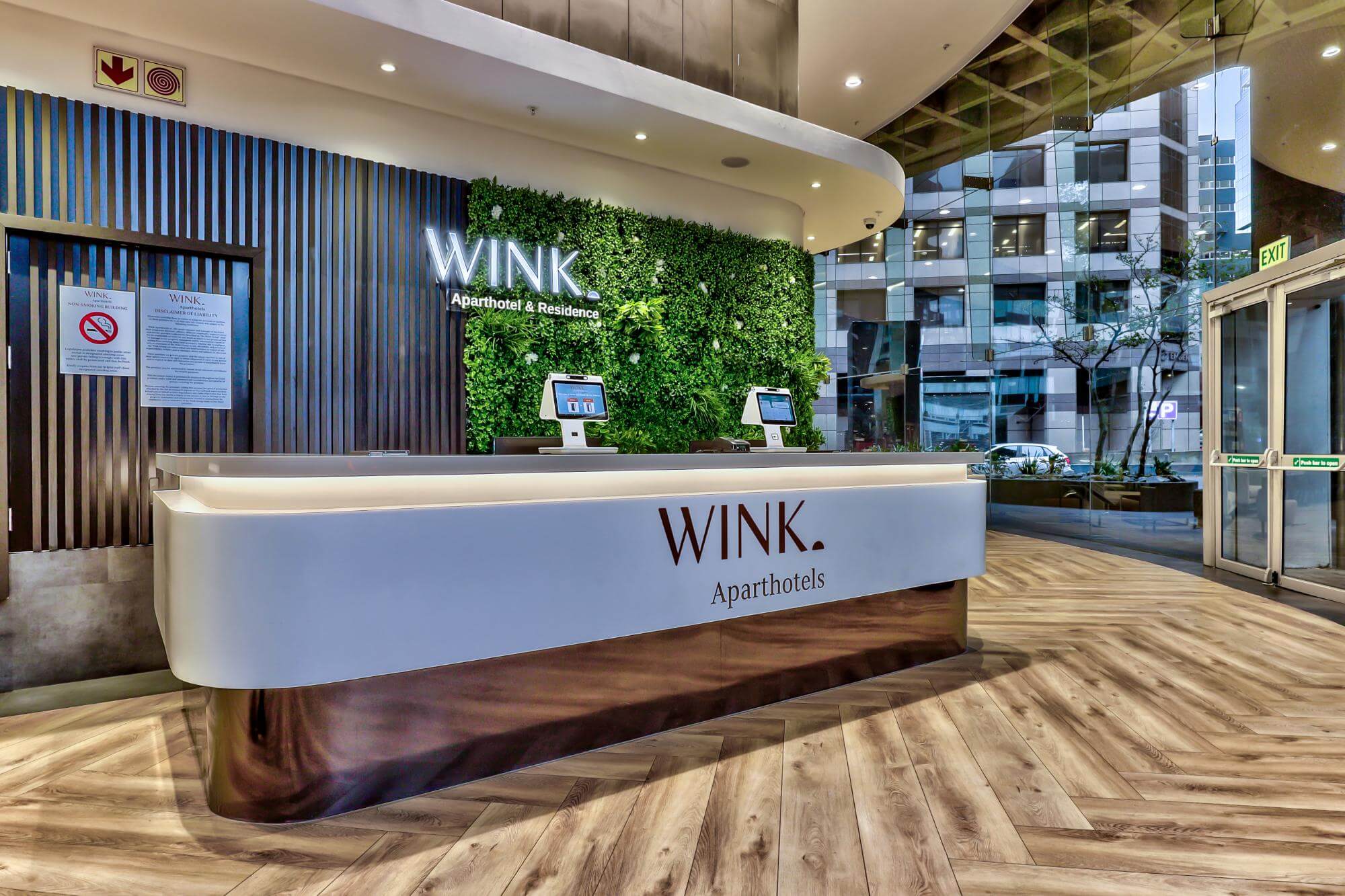
There was a time — not that long ago — when checking into an aparthotel meant arriving at a dimly lit lobby, ringing a bell for a security guard doubling as a night receptionist, and being handed a jangling bunch of keys. If you were less fortunate, it was a keybox bolted to a wall and a late-night SMS with a code. Inside, the unit was functional. Clean, perhaps. Minimal. Almost certainly unserviced. No concierge, no daily housekeeping and no cafe downstairs. It was accommodation — but it wasn’t yet hospitality.
That version of the aparthotel has largely disappeared. Today’s professionally managed aparthotels occupy a defined space between traditional hotels and informal short-term rentals. More streamlined than full-service hotels, yet far more structured than standalone units, the segment has matured into a sophisticated hospitality category shaped by changing traveller behaviour.
According to Derick Tait, Managing Director of WINK Aparthotels, which owns and manages four properties in the Western Cape, the transformation has been driven by demand rather than design.
“The early aparthotel model was transactional,” says Tait. “It offered space and price, but not a consistent hospitality experience. Over time, guests wanted more — and we evolved with that demand.”
How Traveller Behaviour Is Driving the Aparthotels Traveller Expectations Shift

The growth of remote work, extended stays and lifestyle-led travel has reshaped accommodation patterns. What was once perceived as overlap between hotels and aparthotels has settled into clearer market segmentation, with each model serving distinct traveller needs:
| Traditional Hotels | Aparthotels |
|---|---|
| Short leisure stays | Extended stays |
| Conference groups | Remote workers |
| Package tourism | Digital nomads |
| Traditional corporate | Relocation clients |
This clearer segmentation has allowed each accommodation type to refine its offering and meet its guests’ needs more effectively.
“The guest profile has diversified,” says Tait.
“We’re seeing travellers who want autonomy and space, but also safety, brand consistency and service when they need it. That’s where professionally managed aparthotels fit.”
Rather than replacing traditional hotels — which remain essential for conferencing, luxury travel and full-service hospitality — aparthotels increasingly serve longer-stay and hybrid travellers whose needs differ.
Operational Evolution Behind Aparthotels Traveller Expectations Shift
Operationally, the aparthotel model has shifted just as significantly. Traditional hotels carry high fixed costs: 24-hour reception teams, food and beverage staff, extensive common areas and substantial service infrastructure. Aparthotels operate differently, with centralised management, leaner onsite teams and technology-enabled systems.
Dynamic pricing tools, central housekeeping coordination and scaled staffing models allow operators to manage occupancy and margins with greater flexibility. “Technology has fundamentally changed how we operate,” says Tait. “We’re able to manage key functions centrally and optimise revenue across properties in ways that simply weren’t possible a decade ago.”
These structural differences result in distinct cost bases. While hotels remain capital-intensive and service-heavy, professionally managed aparthotels can operate with lower overhead per key, often translating into stronger margin resilience and pricing agility.
Flexibility and Choice: Core of Aparthotels Traveller Expectations Shift
Perhaps the most significant evolution has been the shift from fixed service to optional service. Housekeeping can be scheduled rather than assumed.
Catering is flexible — self-catered or provided. Lifestyle elements are integrated without replicating the scale of traditional hotel restaurants.
WINK, for example, has introduced deli and coffee shop concepts within selected properties, offering guests convenient food and beverage access while maintaining operational efficiency. “Choice has become central to the model,” says Tait.
“Guests don’t necessarily want daily servicing built into the rate, but they want the option. We’ve built our operations around that flexibility.” This adaptability has proven critical in a market where seasonality patterns, length of stay and traveller expectations continue to shift.
From Basic Stays to Structured Hospitality

The image of a security guard behind a makeshift desk handing over keys may still linger in public memory. But the modern aparthotel has moved well beyond its informal beginnings. “We’re no longer just handing over keys,” concludes Tait.
“We’re operating structured, professionally managed hospitality assets. The segment has matured — and it continues to adapt as the market evolves.” In destinations such as Cape Town, where international visibility has increased and traveller profiles have diversified, this evolution reflects broader global shifts in how people live, work and travel.
The rise of the aparthotel is less about disruption and more about alignment. Responding to demand with a model that sits between traditional hotels and short-term rentals. Offering space, flexibility and service on the guest’s terms — clearly reflecting the ongoing Aparthotels Traveller Expectations Shift.
Leave a comment