
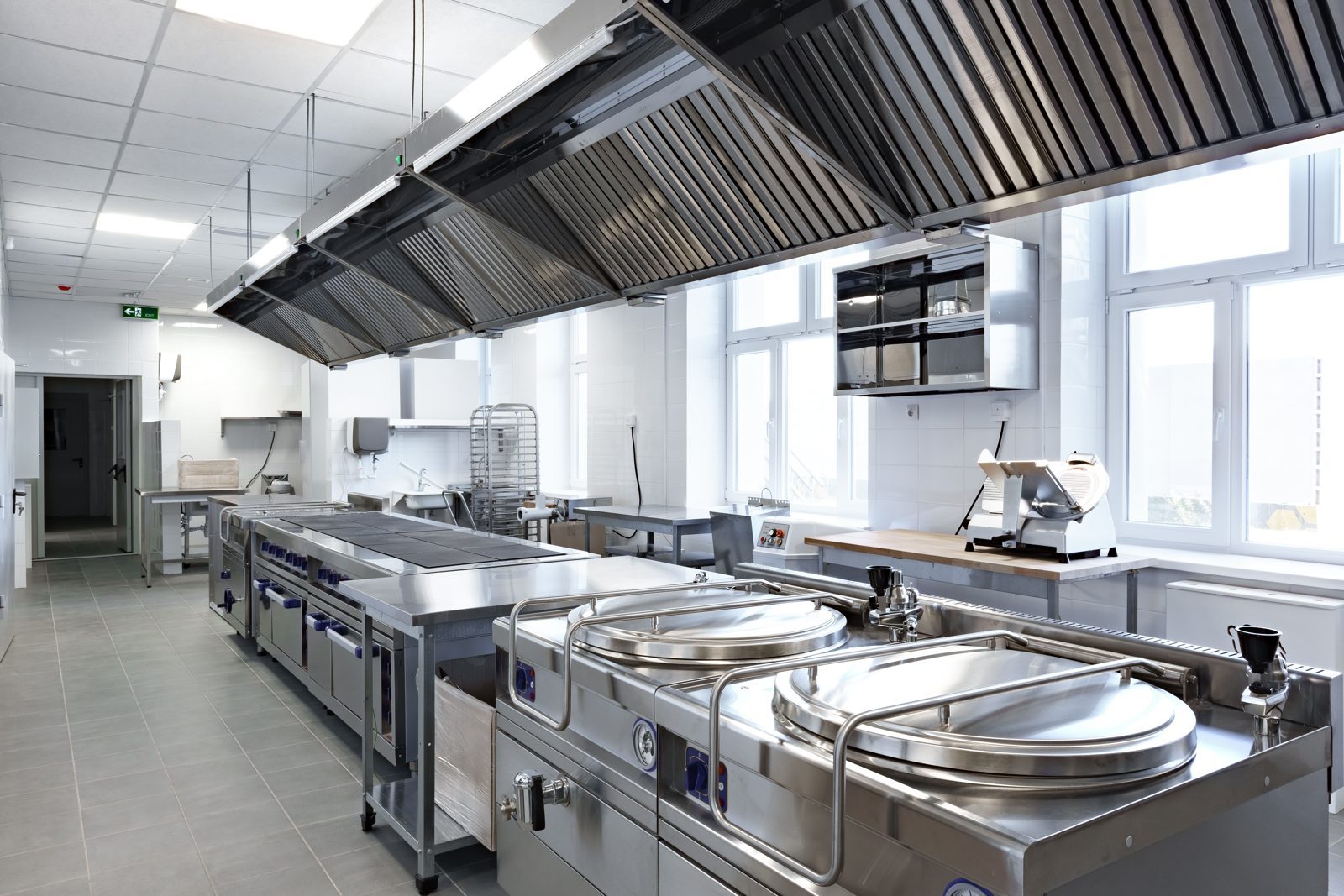
Clean kitchens. Clear conscience. Real savings. One 100g sachet, eight litres of water, four steps from the work surfaces to the fat trap: GreaseOff’s cleaning cycle asks a commercial kitchen to stop buying a chemical for every surface and start working one dilution down the line.
One dilution, all the way down
What is the GreaseOff cleaning cycle?
Walk into most commercial kitchen chemical stores and you will find the same thing: a shelf of single-purpose bottles, each with its own dilution rate, its own safety sheet and its own reorder line. A degreaser for the range. A sanitiser for the boards. Something caustic for the floors. Something else, usually enzyme-based and usually forgotten, for the grease trap. Five products, five training conversations, five ways for a night shift to get it wrong.
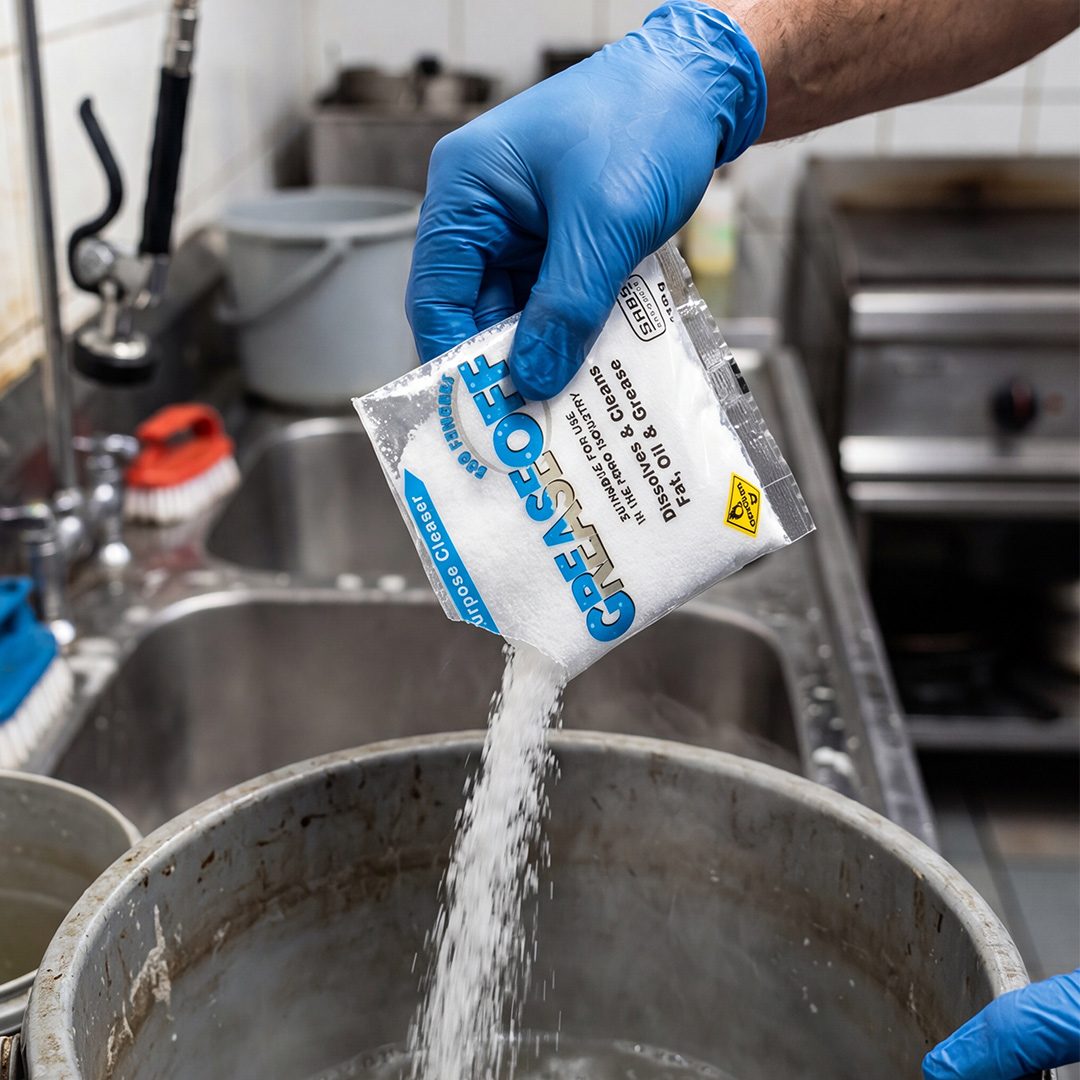
The GreaseOff cycle inverts that. One 100g sachet is dissolved in eight litres of lukewarm water, and that single dilution is then worked through the kitchen in four steps: the work surfaces first, then the extraction canopies and the floors, then what is left goes down the drain to the fat trap, where it keeps working. The solution stays active for eight to ten hours after mixing, which is to say it covers a full shift rather than expiring in the bucket.
Nothing about that routine is novel as a piece of kitchen discipline. What makes it possible is the formulation: GreaseOff is non-toxic, phosphate-free, 100% biodegradable and SABS 1828 approved for food-contact areas, so the same solution that is safe on a prep surface is aggressive enough on a canopy and useful in a trap. Most products in this category have to pick one of those.
The four-step cycle
From work surfaces to the fat trap: the four-step cycle
Each step hands the solution on in a slightly dirtier state, and each one is a job the kitchen was already paying someone to do with a different bottle. Run in order, one bucket covers the lot.
The cycle, step by step
Step 01
Mix One Sachet
- Dose One 100g sachet into 8 litres of lukewarm water
- Then clean Walls, tiles, windows and work surfaces
- Replaces Separate food-safe surface cleaner
Step 02
Vents & Floors
- Where Extraction canopies and vent grilles, then the floors
- The hard part Baked-on grease, the job most kitchens buy caustic for
- Replaces Heavy-duty degreaser and mop detergent
Step 03
Flush The Drain
- Where Down the drain to the fat trap
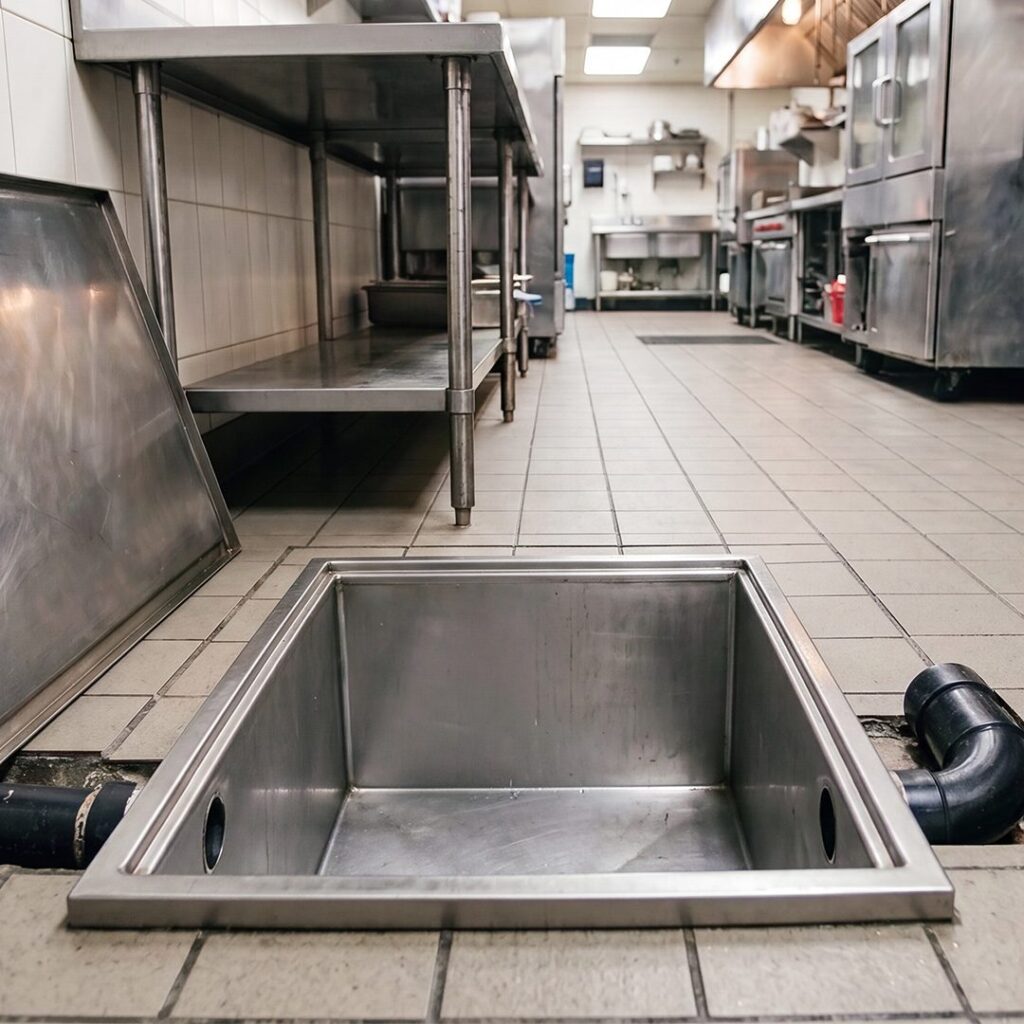
- What it does Dissolves the fats and oils that cause blockages
- Replaces Dosed enzyme trap treatment
Step 04
Use It Everywhere
- Also covers Bins and urinals, utensils, carbonised pans
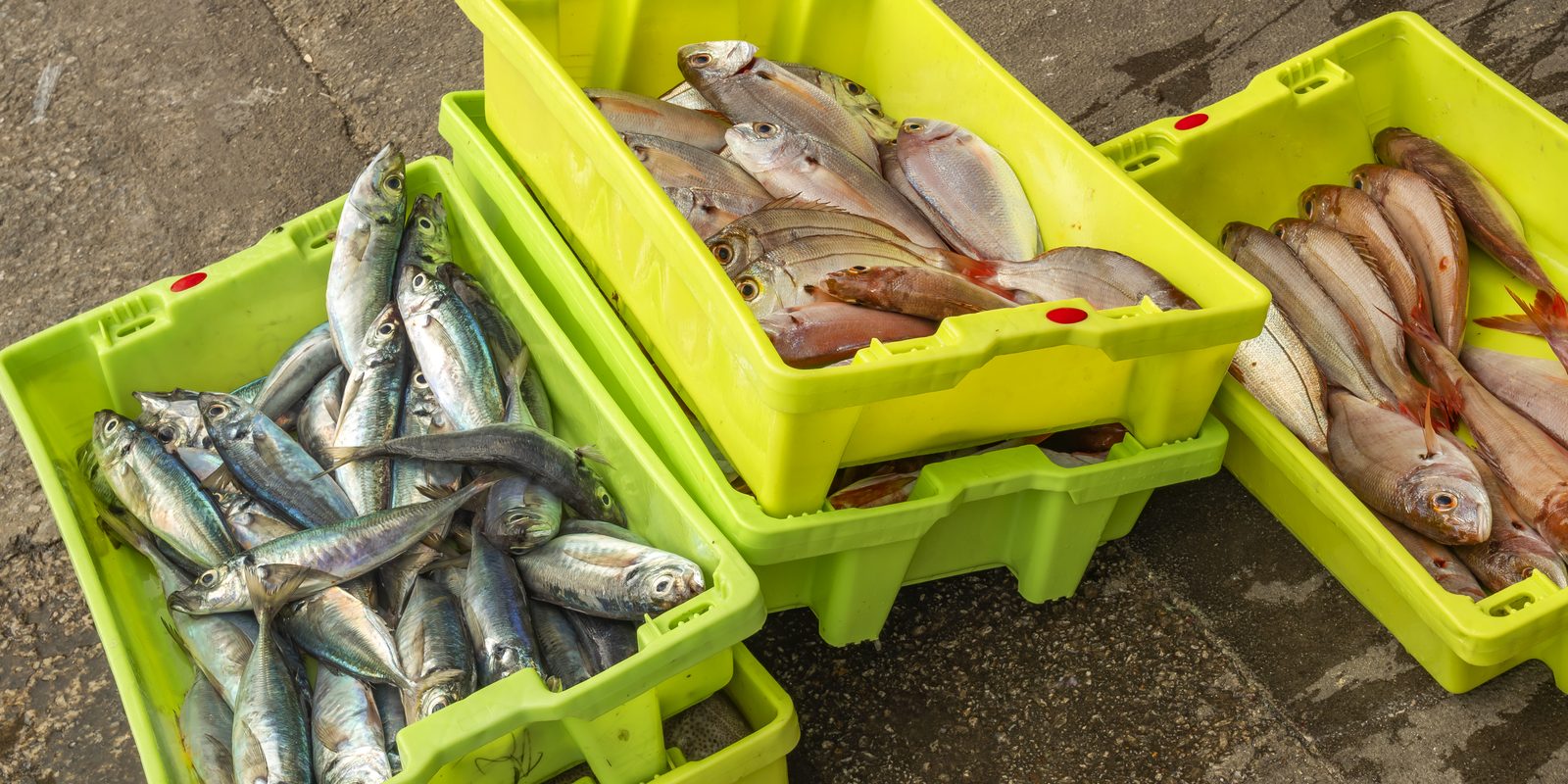
- And Meat crates, boards, linen and carpet stains
- Why it matters Each one is a bottle the store no longer carries
The question a kitchen should be asking is not which chemical is strongest. It is how many chemicals it is still paying to store, train on and get wrong.
The cupboard problem
Why one dilution beats a cupboard of five chemicals
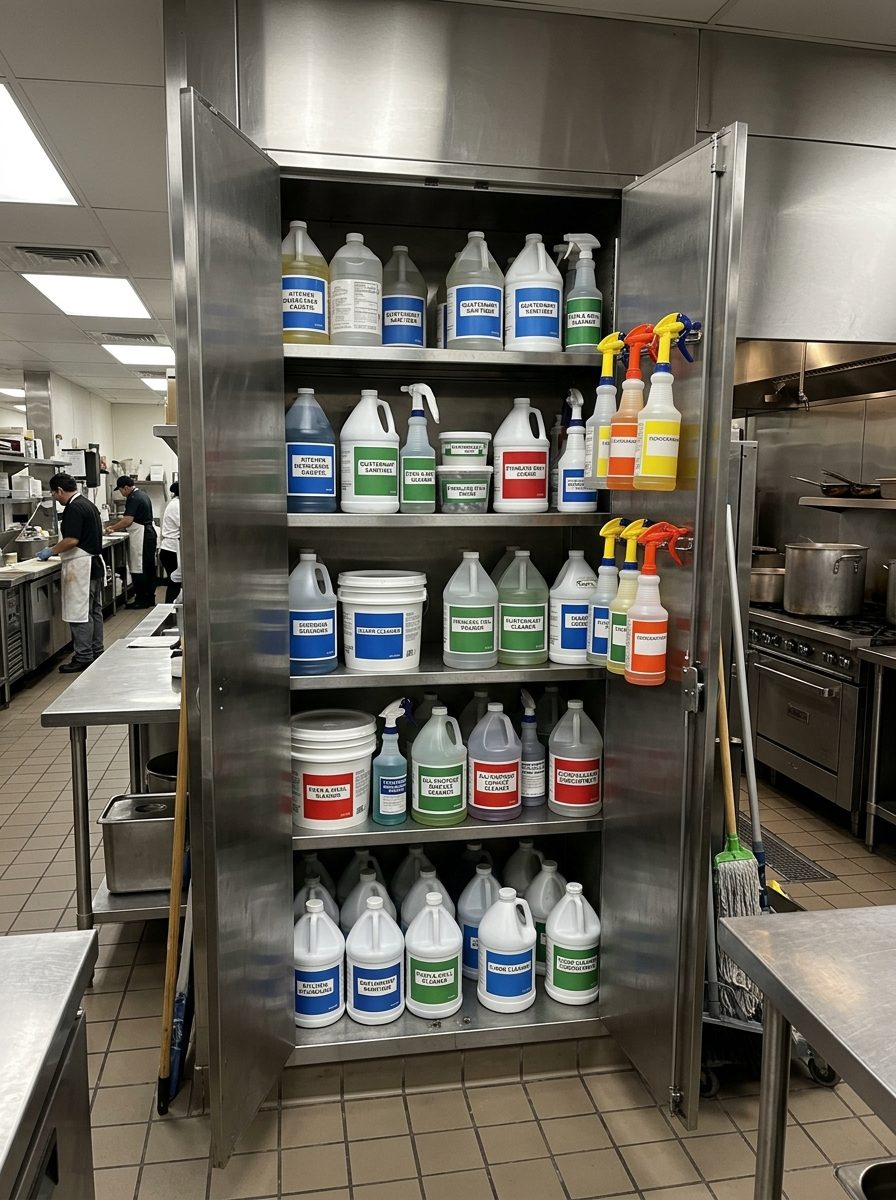
A multi-product cleaning regime carries costs that never appear on the chemical invoice. Every additional SKU is another line to reorder, another pallet position, another safety data sheet in the file, another dilution rate a new starter has to memorise on their second shift. It is also another opportunity for the classic failure: the right product used at the wrong strength on the wrong surface, or the expensive one used for everything because it is the bottle nearest the door.
Consolidation is where the operational saving sits. Fewer products means a shorter induction, a simpler stock count, less capital sitting on a shelf and one dilution rate for a whole brigade to remember rather than five.
It is also a compliance saving. One certified product in the store is one product a health inspector has to be satisfied with, and one set of paperwork that has to be current, rather than a shelf of mixed provenance.
There is a formulation point here too. GreaseOff is a bio-science formulation but it is not enzyme-based, which matters in a working kitchen: enzyme cleaners are slower to act and sensitive to temperature, and they have a shorter usable shelf life. A granular sachet that stores dry and mixes on demand behaves better in a store room than a shelf of part-used liquids.
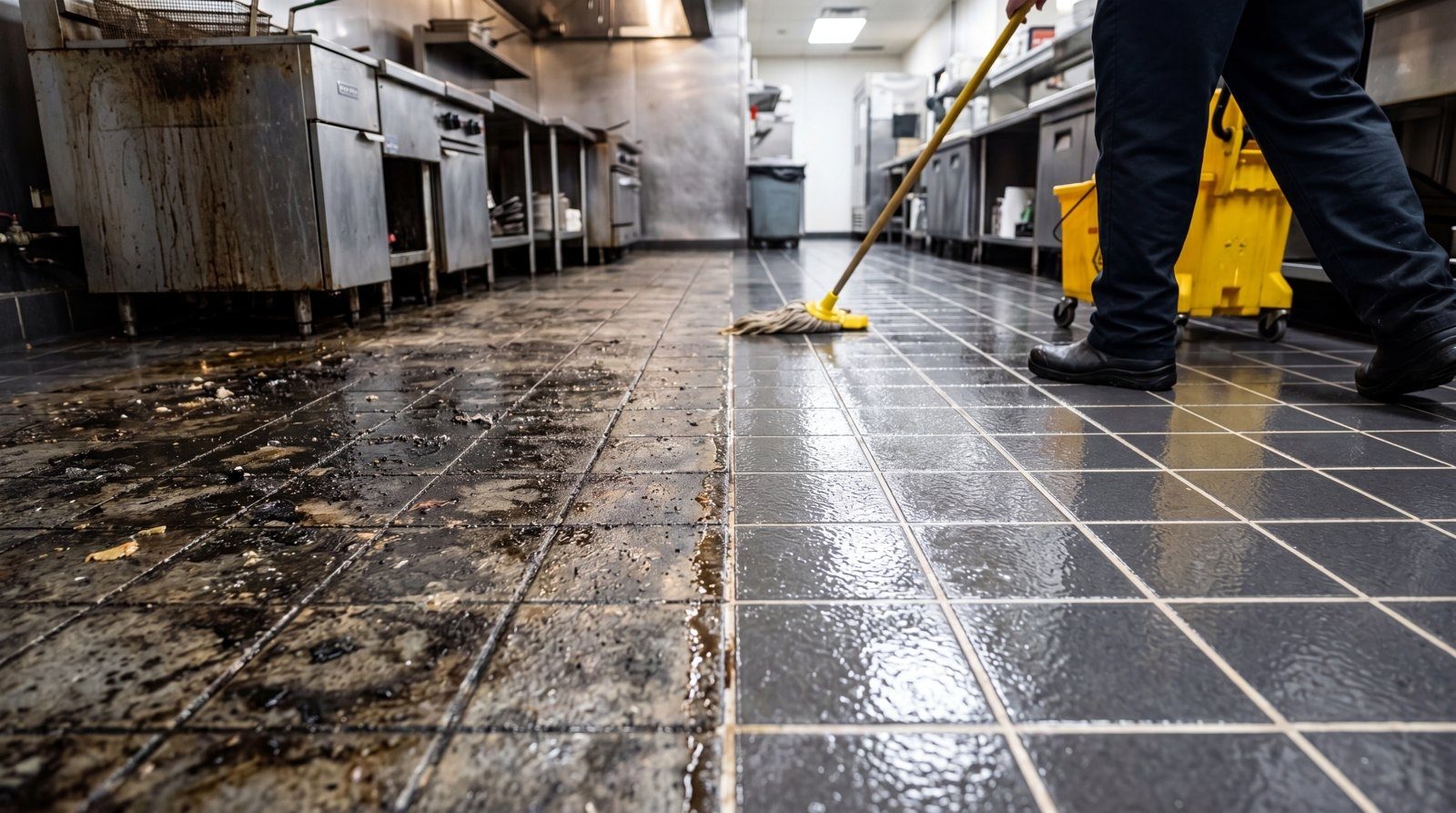
The cycle, at a glance
The GreaseOff cleaning cycle, visualised
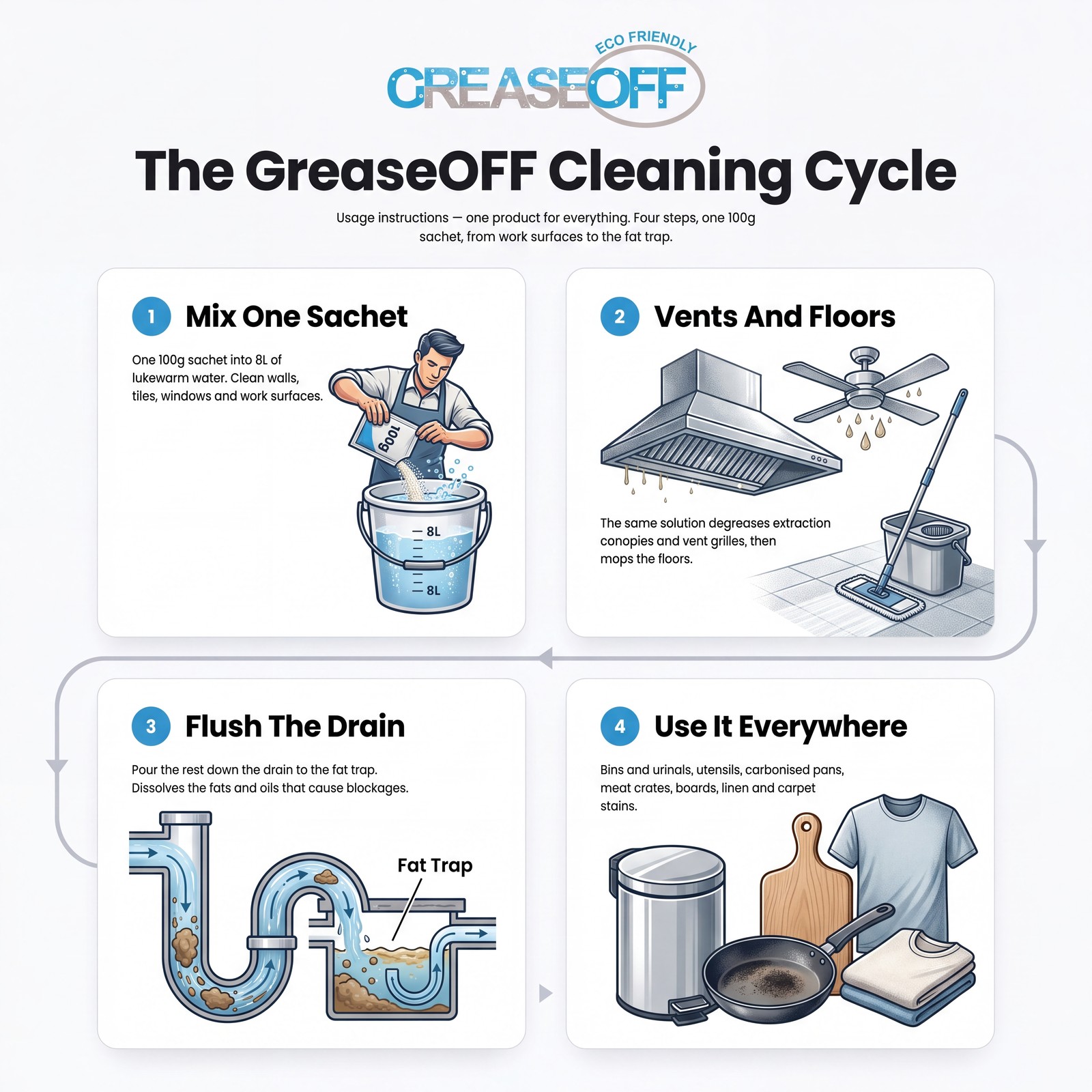
Read it as a single pass rather than a list of tasks. The bucket is mixed once at the top of the clean-down, and every step that follows uses what the step before it handed on. By the time the solution reaches the drain it has already done the surfaces, the canopies and the floors, and the last step needs no dosing at all: what goes down the gully is still working on the fat trap it lands in.
Getting started
Try it in your kitchen: getting started
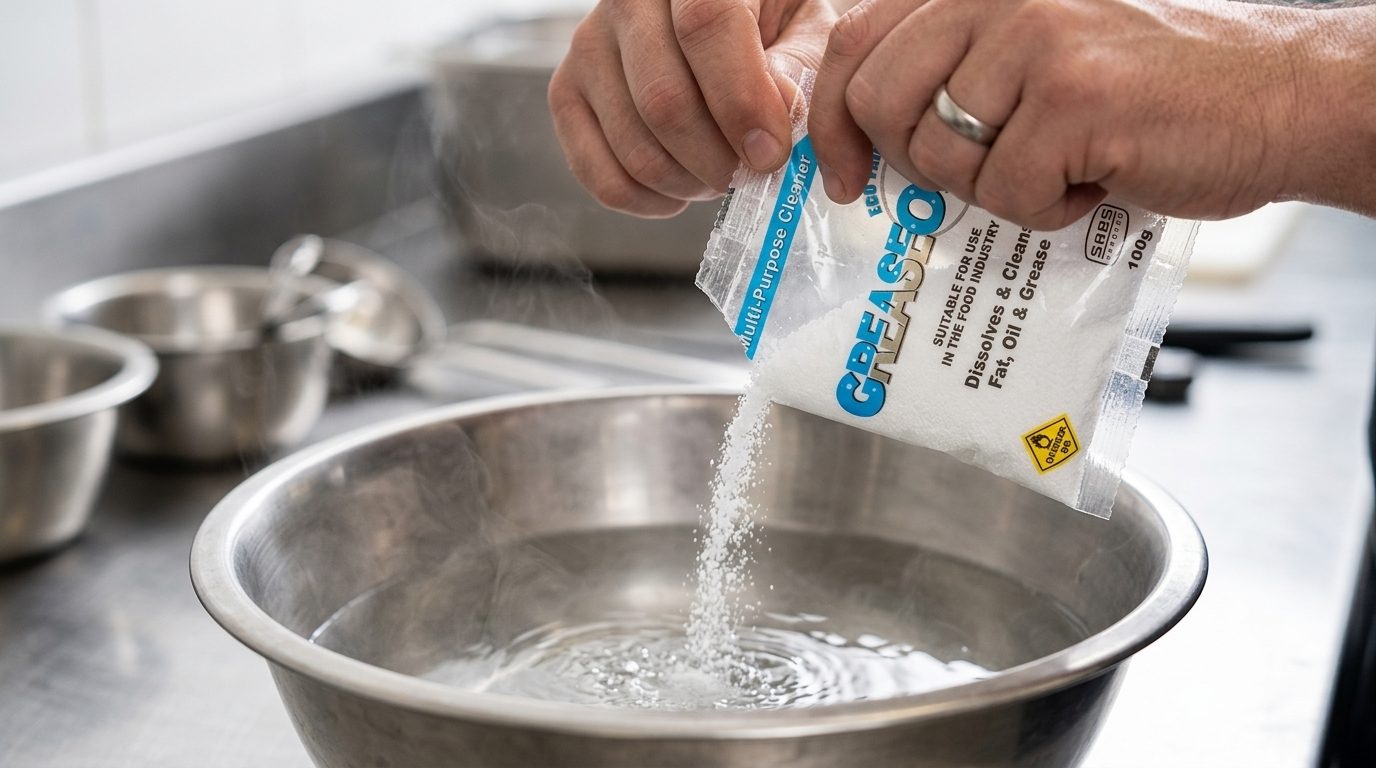
The honest way to test a claim like this is to run it against your own worst job. Pick the surface your current regime handles least well, usually the extraction canopy or the trap, mix one sachet in eight litres of lukewarm water, and run the full cycle through a single clean-down. Then count what you did not open. If it holds on the hardest job, the easier ones were never the question.
GreaseOff is manufactured in South Africa. It is already in service in kitchens that do not get to be casual about hygiene: Protea Hotel by Marriott at O.R. Tambo International, Starbucks South Africa, the Guvon Training Academy, Catercorp, Croft & Co, Oh Yummy Foods, Techno Chef, Circle C Meats and Magnetic Event Management.
Product detail and trade enquiries at greaseoff.co.za · SABS 1828 · ISO 9001 · SANS · Halaal certified
At a glance: the specification
Docket 01
Certification
- SABS 1828 Food-safe cleaning product accreditation
- ISO 9001 Quality management system
- SANS South African National Standards compliance
- Halaal Permissible in Halaal-certified kitchens
Docket 02
Formulation
- Base Bio-science formulation, not enzyme-based
- Phosphates 0%, no residues left behind
- Biodegradable 100%
- Handling Non-toxic, safe to store in a working kitchen
Docket 03
Format & Dosing
- Format Granular sachet, 100g
- Dilution 1 sachet : 8 litres lukewarm water
- Active for 8 to 10 hours once mixed
- Applications Surfaces · canopies · floors · drains · fat traps · and more
For the kitchen and the buyer
Frequently asked questions about the GreaseOff cleaning cycle
What is a multipurpose commercial kitchen cleaner?
A single certified product used across several kitchen cleaning jobs at one dilution, rather than a separate specialist product for each surface. One 100g GreaseOff sachet in eight litres of lukewarm water runs a four-step cycle: work surfaces, then extraction canopies and floors, then down the drain to the fat trap, with the same solution also used on bins and urinals, utensils, carbonised pans, crates, boards, linen and carpet stains.
How do you mix and dose GreaseOff?
One 100g granular sachet dissolves into eight litres of lukewarm water. The mixed solution stays active for eight to ten hours, which covers a full shift, so a single bucket is worked through all four steps rather than remixed per task.
Is GreaseOff safe to use on food-contact surfaces?
Yes. GreaseOff holds SABS 1828 accreditation, the South African food-safe cleaning product standard for kitchen and food-preparation environments, and it is non-toxic and phosphate-free. It is also Halaal certified, which makes it permissible for use in Halaal-certified kitchens.
Is GreaseOff an enzyme-based cleaner?
No. It is a bio-science formulation that is deliberately not enzyme-based. Enzyme cleaners are slower to act, more sensitive to temperature and shorter-lived on the shelf; a dry granular sachet mixed on demand avoids those constraints in a busy kitchen store.
Can the same product be used on a grease trap?
Yes, it is step three of the cycle. Because the routine finishes at the drain, the used solution treats the drain line and the fat trap as it leaves the kitchen, dissolving the fats and oils that cause blockages. That reduces the grease load reaching the trap between scheduled services rather than replacing that schedule.
Does consolidating to one product really save money?
The saving is a consolidation saving rather than a unit-price one: fewer SKUs to buy, store, transport and reorder, a shorter induction for new cleaning staff, less capital tied up in part-used stock, and one dilution rate for a brigade to remember. GreaseOff publishes wider savings figures on its own sites; ask for the underlying client data before you build a business case on them.
Which South African operators are already using it?
Current users include Protea Hotel by Marriott at O.R. Tambo International, Starbucks South Africa, the Guvon Training Academy, Catercorp, Croft & Co, Oh Yummy Foods, Techno Chef, Circle C Meats and Magnetic Event Management.
Sponsored content · This feature was produced by Hospitality Marketplace in association with GreaseOff. Product specifications, certifications and client references supplied by the brand.
Leave a comment