
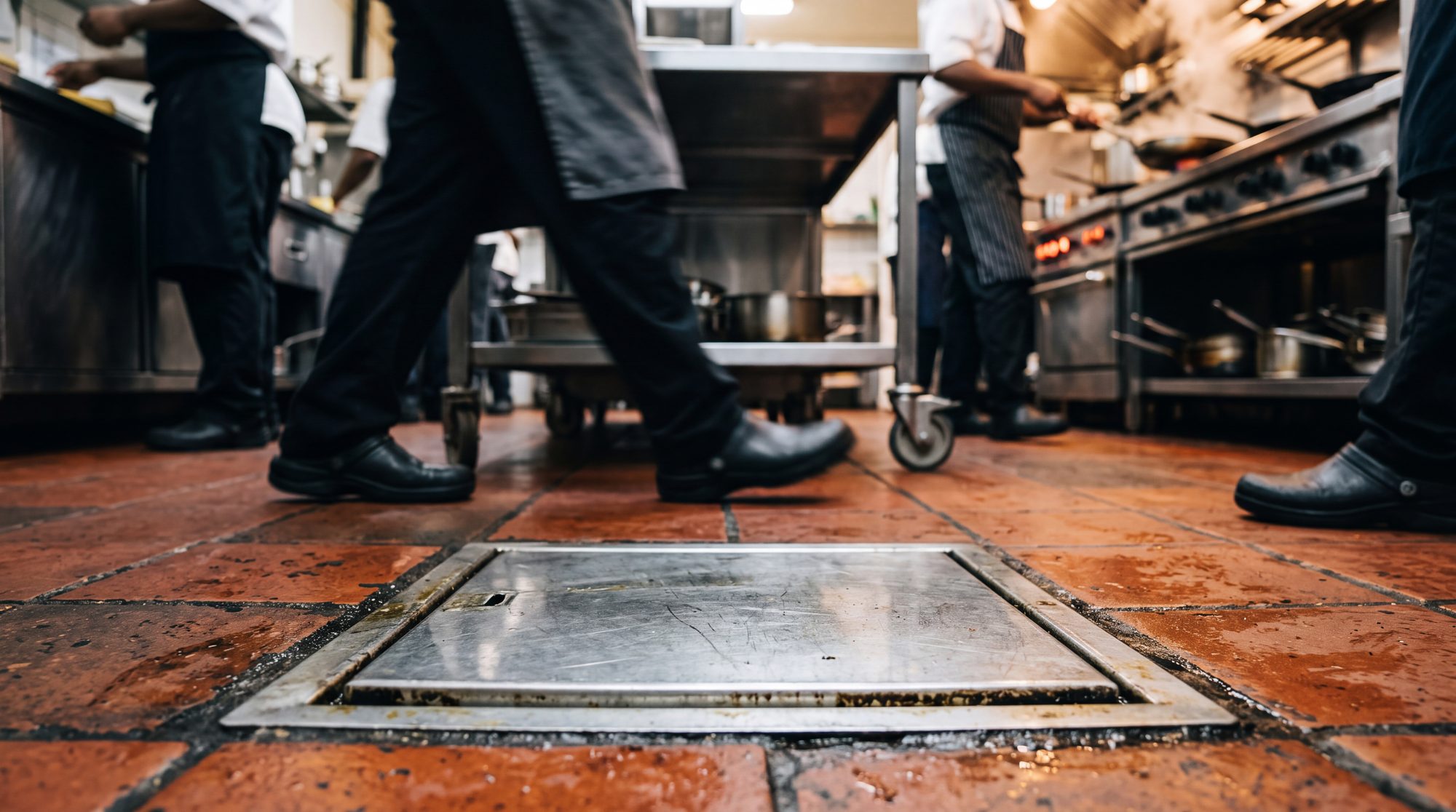
Clean kitchens. Clear conscience. Real savings. The most neglected compliance risk in a commercial kitchen, and the clearest before/after proof GreaseOff has.
Every commercial kitchen has a grease trap, and many kitchen managers could not tell you when it was last properly serviced. It sits underground or under a sink, out of sight and out of the daily cleaning rota, until it fails: and a failed grease trap is not a hygiene inconvenience. It is a blocked drain line, a possible discharge violation, and in some municipalities, a direct compliance breach with a cost attached.
This piece covers grease trap cleaning in South Africa as the compliance category it actually is: what happens when a trap fails, how GreaseOff’s cleaning cycle treats it, what a properly maintained trap looks like against a neglected one, and how to build a maintenance schedule that survives contact with a real kitchen’s staff turnover and shift pressure.
Out of sight
The most neglected compliance risk in your kitchen
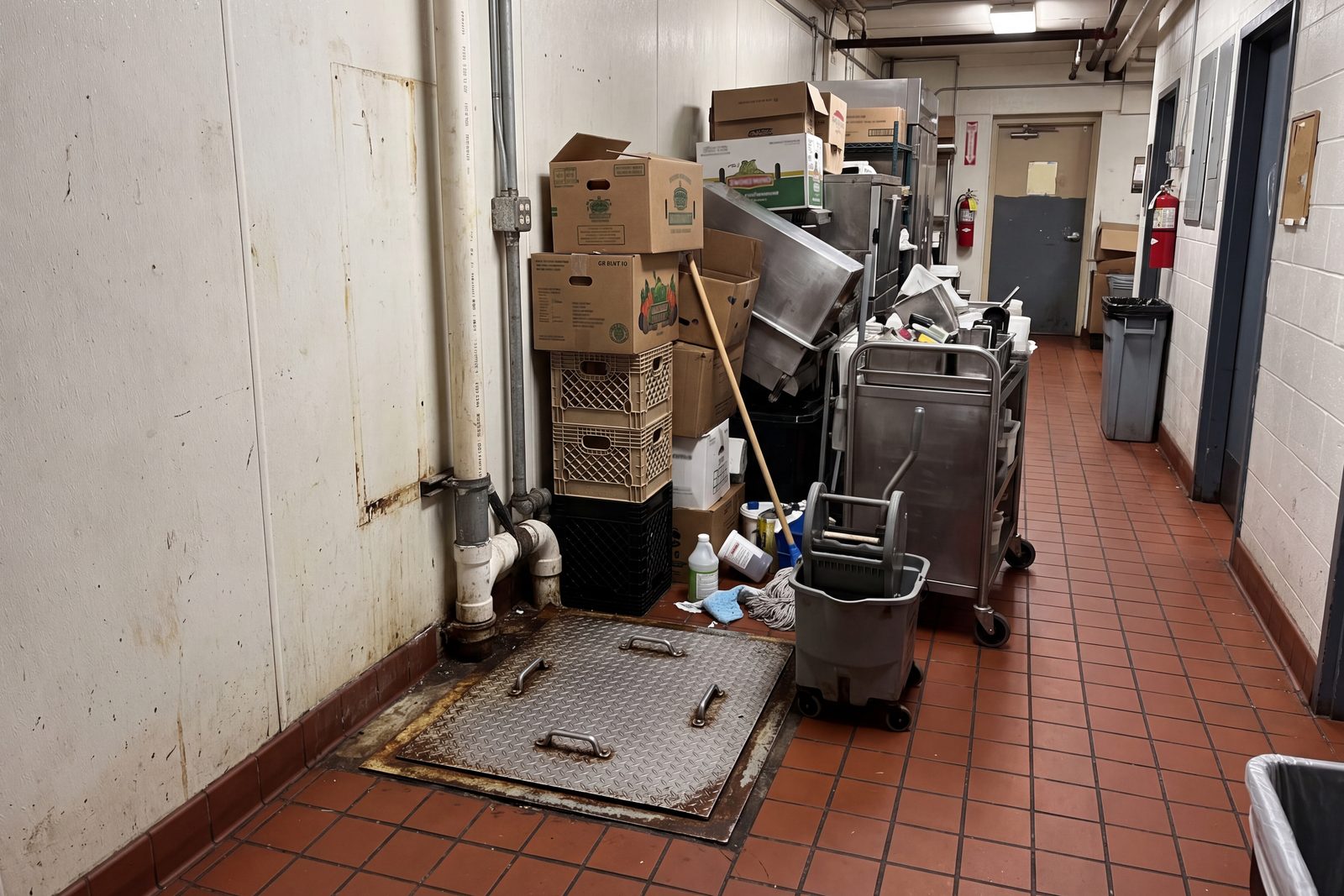
Grease trap maintenance loses to almost everything else on a kitchen manager’s list because it is invisible until it isn’t. Front-of-house hygiene, food safety on the pass, and daily surface cleaning all have obvious, immediate consequences if skipped. A grease trap can go weeks or months past its service interval without any visible sign, until the drain backs up during a Friday dinner service, which is the worst possible moment to discover the schedule slipped.
That invisibility is exactly why it belongs on a compliance checklist rather than a nice-to-have list. Municipal wastewater by-laws in South Africa hold food-service operators accountable for what leaves their kitchen through the drain, and a neglected trap is a direct point of failure. Johannesburg’s Water Services By-laws, for one, require effluent likely to carry grease, oil or fat to pass through a grease trap before it reaches the sewer, and require that trap to be cleaned regularly, with a register of each cleaning kept on site.
The failure
What happens when a grease trap fails
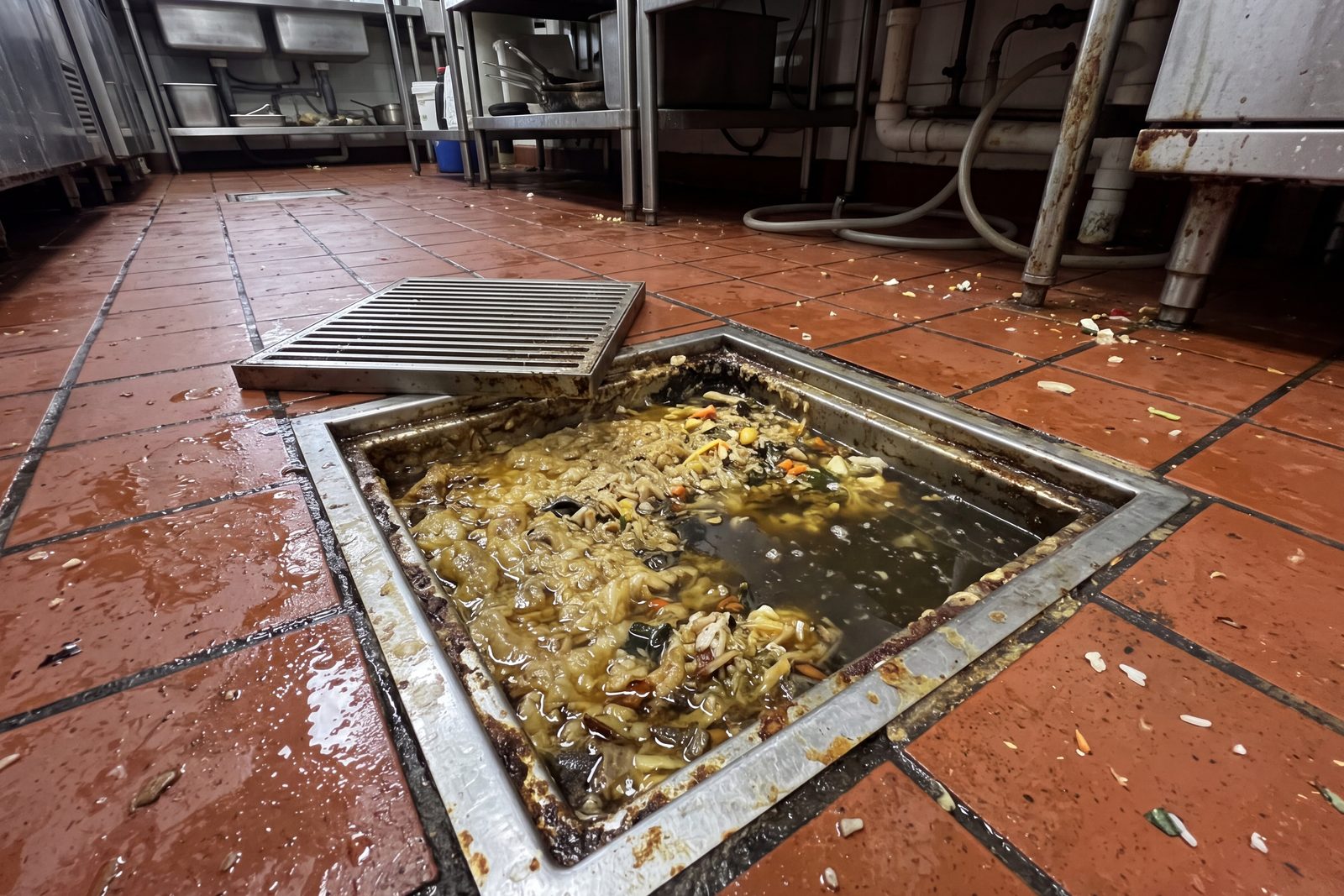
The immediate signs are a slow or blocked drain, a persistent bad odour around the wash-up or prep area, and in serious cases, a backup that stops service entirely. Beyond the operational disruption, an operator with a documented history of grease trap neglect is in a materially weaker position if a municipal inspector or a landlord raises the issue: there is no paper trail showing due diligence.
The cost of a reactive fix (emergency plumbing, potential closure while it’s resolved, and the reputational exposure of a kitchen that had to shut mid-service) is higher than the cost of keeping the trap on a preventive schedule.
The routine
What a properly maintained trap looks like
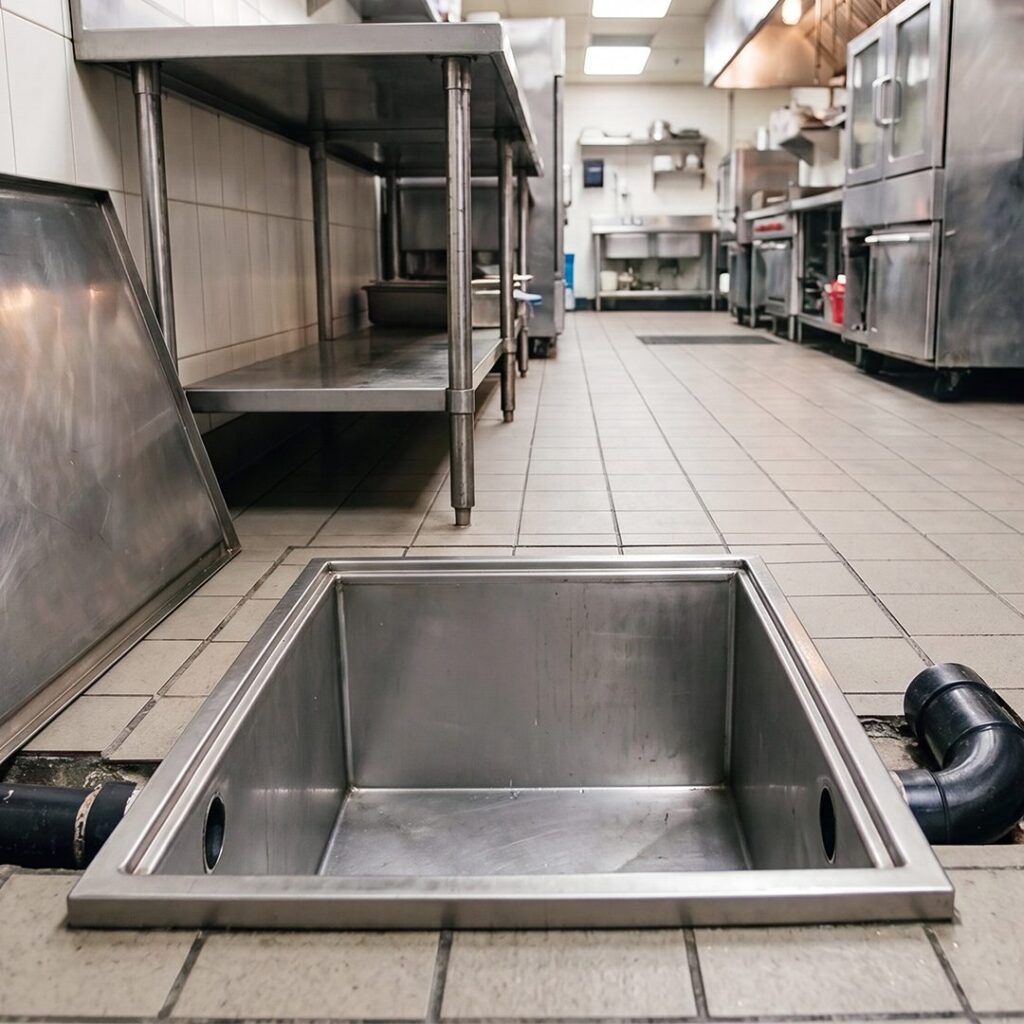
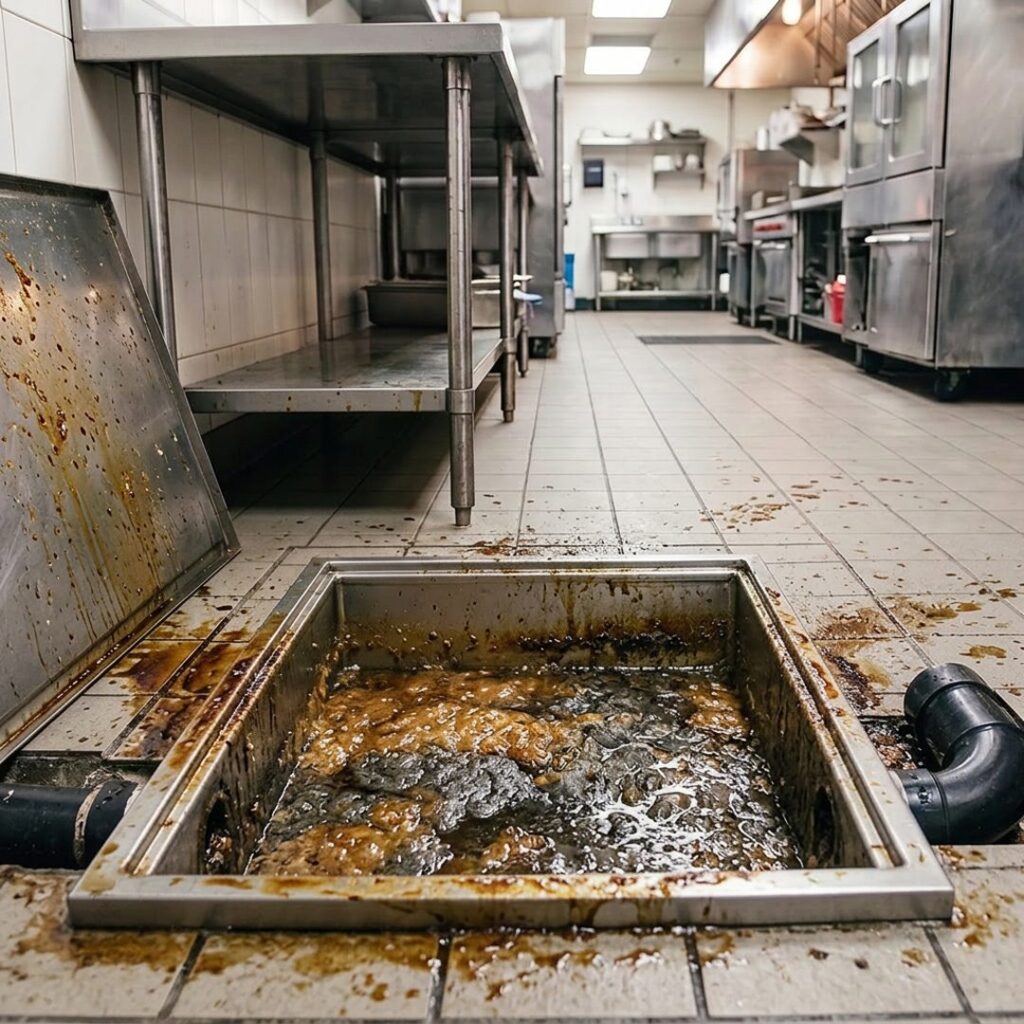
GreaseOff’s cleaning cycle treats grease trap maintenance as the final stage of the same routine used on prep surfaces, canopies and floors, rather than a separate task requiring its own product and its own dosing schedule. As the mixed solution is worked through the kitchen, what reaches the drain is still active: it continues dissolving fats and oils in the trap rather than arriving as plain wastewater.
That is the clearest visual proof point GreaseOff has: a fouled trap next to a cleared one. Grease trap cleaning here is positioned as a routine outcome of the daily clean-down, not an occasional deep-clean intervention.
The schedule
Building a grease trap maintenance schedule that actually gets followed
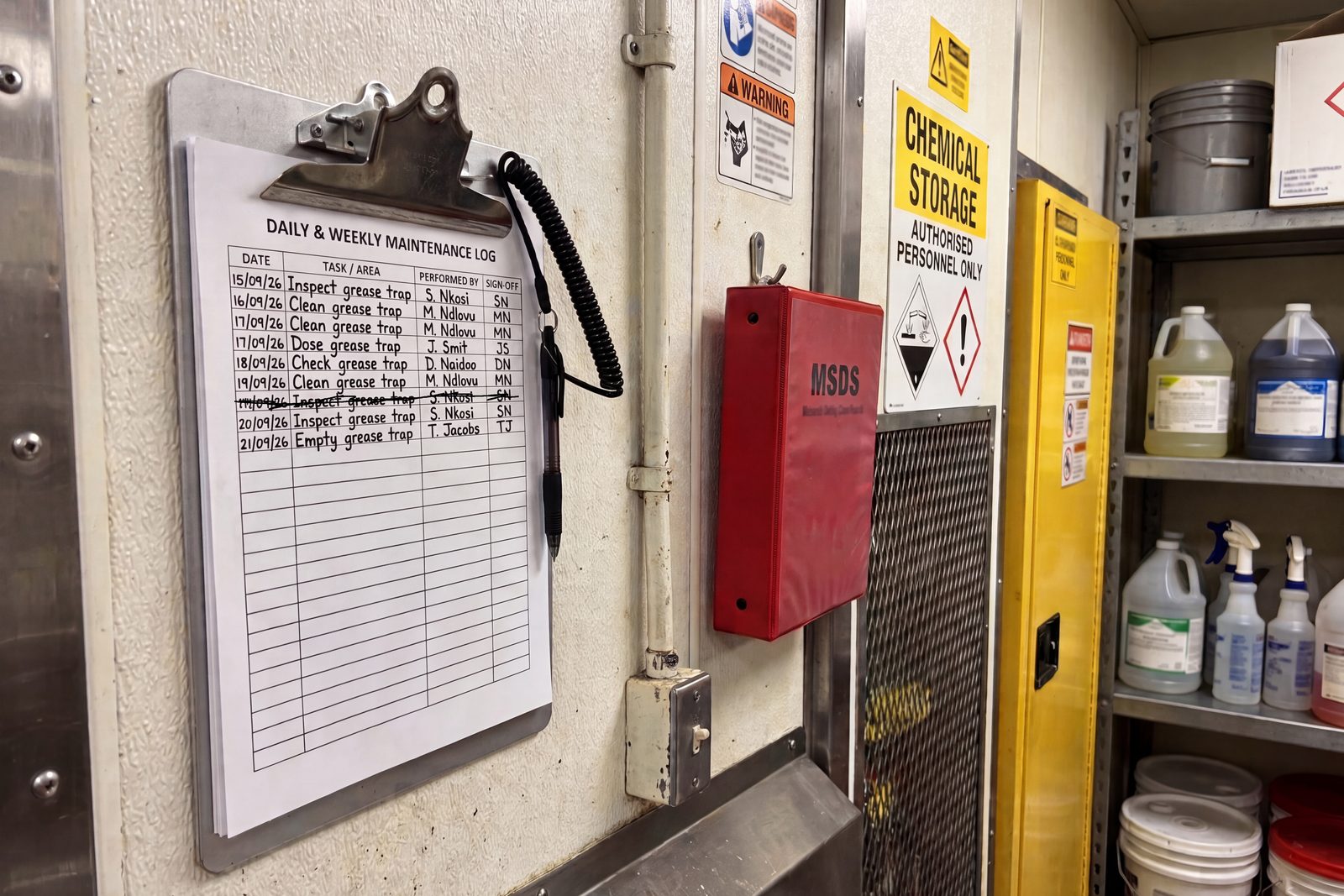
A schedule that depends on someone remembering is a schedule that will eventually fail. The maintenance routines that hold up under real kitchen pressure share three features: they are attached to an existing task a shift is already doing (so grease trap treatment happens as the last step of the standard clean-down, not as a separate job to schedule), they are logged on a visible sheet with a name and date against each entry, and they have a named owner per shift rather than a general team responsibility.
Building grease trap maintenance into the existing GreaseOff cleaning cycle, rather than adding a separate trap product with its own schedule, is the practical route to a routine that survives staff turnover.
Grease trap maintenance, at a glance
The risk
- Visibility Invisible until it fails
- Failure Blocked drains, bad odour, service disruption
- Exposure Municipal wastewater compliance exposure
The routine
- When Treated as step three of the daily clean-down
- Product No separate product or dosing schedule required
- Active Solution stays active 8 to 10 hours after mixing
The proof
- Visual Before/after visual: fouled trap vs. cleared trap
- Use Fat traps head GreaseOff’s own list of uses for the product
- Effect Reduces grease load between scheduled services
Product information and trade enquiries at greaseoff.co.za · Fat traps · floors · surfaces · SABS 1828
For the kitchen and the owner
Frequently asked questions about grease trap cleaning and maintenance
How often should a commercial kitchen grease trap be cleaned?
Interval requirements vary by municipality and trap size, but the operational principle holds everywhere: a trap maintained as part of a daily cleaning routine is less likely to fail than one serviced only on a periodic deep-clean schedule.
What are the warning signs of a failing grease trap?
A slow-draining sink, a persistent odour around the wash-up or prep area, and visible grease build-up at the gully are the earliest indicators, typically appearing well before a full blockage.
Can a grease trap be maintained with the same product used on kitchen surfaces?
Yes: the GreaseOff cleaning cycle treats the grease trap as the final stage of the same dilution used on prep surfaces, canopies and floors, so the solution is still active when it reaches the drain.
Is grease trap maintenance a legal requirement in South Africa?
Municipal wastewater by-laws hold food-service operators accountable for grease and fat discharge, and some go further: Johannesburg’s require the trap to be cleaned regularly and a cleaning register kept. The national hygiene regulations for food premises (R638 of 2018) require waste water to be disposed of to the satisfaction of the local authority. That makes documented maintenance a genuine compliance consideration rather than only a hygiene one. Requirements vary by municipality: check local by-laws for specifics.
Does regular grease trap treatment replace scheduled professional servicing?
No. Daily treatment reduces the grease load reaching the trap between services; it is a preventive measure that complements, rather than replaces, a scheduled professional pump-out and inspection.
Sponsored content · This feature was produced by Hospitality Marketplace in association with GreaseOff. This article gives general guidance and is not a substitute for checking specific municipal by-laws applicable to your premises.


Leave a comment