
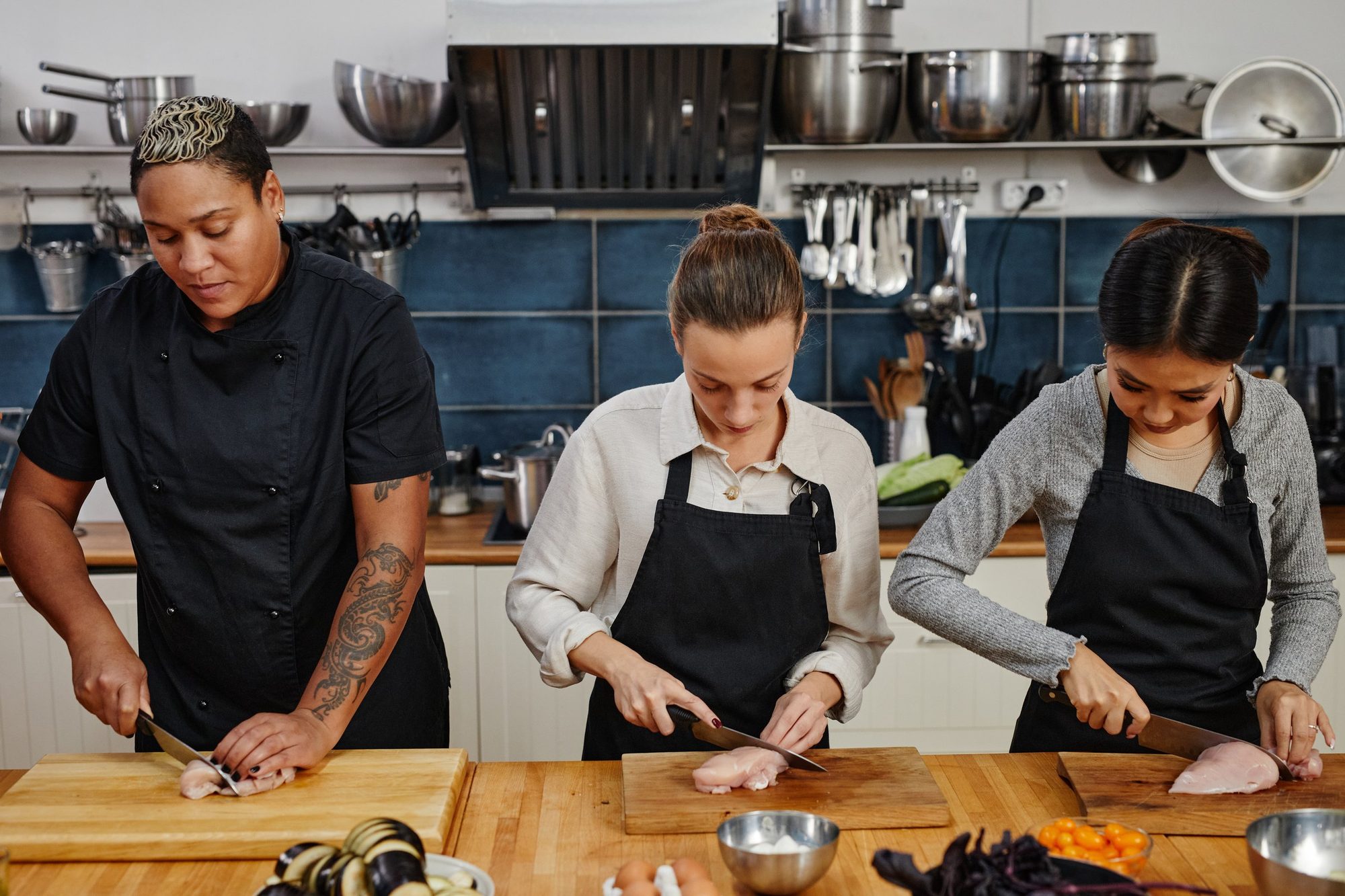
Students at work in a teaching kitchen. Image: seventyfourimages / Envato Elements
Press release issued by Capsicum Culinary Studio through Dragon Media, 29 October 2026.
In South Africa, conversations about access to economic opportunity overwhelmingly focus on universities, technology and large-scale industrial policy. These matter. But there is another pathway that deserves far greater attention for its potentially outsized impact: culinary education. Because food is more than a basic human need or a thriving consumer market – it is an economic engine capable of creating jobs, building businesses, preserving cultural heritage and opening doors to global opportunities.
“When the layperson hears the term ‘culinary education’, for the most part it still signals ‘chef training’. However the reality is that, from professional kitchens and food entrepreneurship to hospitality innovation and tourism, culinary training opens doors to a tremendous range of viable careers, locally and globally, turning talent into tangible economic value,” says Gerald Hamadziripi at Capsicum Culinary Studio, SA’s largest provider of culinary education since 2003, with 7 campuses serving students across the country.
“In South Africa, culinary education strongly represents a first step towards financial independence, dignity, entrepreneurship and a more secure future. With the right training, mentoring and access to real workplaces, culinary education can and does help turn talent and ambition into meaningful economic participation,” Hamadziripi says.
More than learning to cook
Culinary training teaches far more than recipes and knife skills. A good programme builds discipline, teamwork, time management, communication, problem-solving skills and the ability to remain calm under pressure.
“For young people opting not to follow the traditional academic route, culinary education can offer an accessible and practical entry point into the world of work and, significantly, entrepreneurship in a labour-intensive sector,” says Hamadziripi.
The economic case for culinary education is compelling. Tourism is one of South Africa’s most dynamic and fastest growing sectors, and food and hospitality services sit at the heart of the visitor experience.
According to Statistics South Africa, tourism directly employed 953,981 people in 2024, representing 5.7% of total employment, while contributing R361.7 billion to the economy, or 4.9% of GDP. South Africa welcomed 10.5 million tourists in 2025, up from 8.9 million in 2024, while nearly one million arrivals were recorded in April 2026 alone. This growing sector it is uniquely positioned to absorb new entrants into the workforce while equipping them with valuable skills and experience.
“Behind these figures are real people: chefs, kitchen assistants, bakers, waiters, housekeepers, suppliers, big and small farmers, drivers and small-business owners. Every restaurant, hotel, lodge, winery or catering company relies on trained people to deliver quality, consistency and a positive visitor experience. And as they grow, so does opportunity,” says Hamadziripi.
Strengthening local economies
Culinary education can also help keep economic value within communities. When local cooks, bakers and caterers are trained and supported, they are better placed to supply schools, workplaces, events, guesthouses and tourism businesses.
A stronger culinary skills base can therefore help communities capture more of the value generated by tourism. Instead of simply hosting visitors, towns and townships can build food businesses, supply chains and employment opportunities that endure beyond a single season, says Hamadziripi.
What good training looks like
Not every culinary course leads to opportunity, warns Hamadziripi.
“A programme that ends without workplace exposure, assessment or employer connections may leave graduates with a certificate but few practical prospects.”
A meaningful culinary education should therefore include: – Accredited, industry-recognised training. – Sufficient practical kitchen experience, alongside theory. – Work-integrated learning, internships or learnerships with hotels, restaurants and caterers. – Food safety, customer service, financial literacy and basic business skills. – Mentoring, career guidance and placement support. – Recognition of prior learning for experienced cooks who have skills but no formal qualification.
“Culinary education will not solve every economic challenge facing South Africa. But it can change individual lives in practical, visible ways. It can give a young person their first job, help an experienced cook gain formal recognition, or enable an entrepreneur to build a business that employs others,” says Hamadziripi.
“In a country with extraordinary food heritage, creative talent and entrepreneurial energy, kitchens should be seen not only as workplaces, but as workshops for social mobility. With thoughtful investment and strong partnerships, culinary education can help more young South Africans turn skill into opportunity.”
Source: Capsicum Culinary Studio media release, 29 October 2026.



Leave a comment