

Feeding Hospitality at scale is no longer simply about sourcing ingredients. It is about building a logistics infrastructure capable of delivering massive volumes of perishable products without disrupting quality, safety, or operational efficiency.
For boutique restaurants, the romantic idea of farm-to-table sourcing may still work. But for large hotel groups, banqueting operations, and high-volume hospitality venues, feeding thousands of guests requires industrial-level coordination.
The Feeding Hospitality supply chain now relies on logistics optimisation, cold chain monitoring, and procurement systems that prioritise yield, consistency, and supply stability.
Industry leaders are already discussing these operational shifts in articles like Hostex 2026 Modern Chef: Why the Industry’s Biggest Show Is Evolving, which highlights how modern hospitality operations are adapting to new technologies and supply systems.
The Cold Chain Battleground in Feeding Hospitality
The romantic idea of farm to table sourcing works beautifully for a forty seat boutique restaurant. But when you are running a five hundred cover banqueting service or feeding thousands of guests through a national hotel group, romance does not feed the operation. Scale changes everything.
High volume hospitality is not simply about cooking food. It is about engineering a supply chain capable of moving massive volumes of perishable ingredients through a fragile cold chain without failure. Moving protein from a commercial farm to a hotel receiving bay without breaking temperature requires precision logistics.
Global distribution giants like Sysco operate enormous refrigerated fleets supported by telematics, GPS routing optimisation, and continuous temperature monitoring. Their entire infrastructure exists to guarantee that chilled products remain within safe temperature ranges from warehouse to delivery dock.
South African operators face an even more complex environment. Logistics routes are longer. Infrastructure is less predictable. Power interruptions can disrupt refrigeration at multiple points along the chain. As a result, local distribution heavyweights such as Bidfood South Africa and the Shoprite Checkers Food Services division have invested heavily in multi temperature logistics networks designed to maintain strict cold chain control across frozen, chilled, and ambient goods. In high volume hospitality, logistics is as critical as cooking.
The Brutal Math of Volume Procurement
Procurement is no longer about negotiating a few cents off a crate of tomatoes. The real calculation is total operational yield. Buying cheaper ingredients often becomes a false economy once they reach the kitchen. Procurement teams must now evaluate three hidden cost factors.
- Prep Labour: How many staff hours are spent peeling, trimming, or breaking down a bulk product before it reaches the pass?
- Water Retention and Cooking Loss: Proteins treated with added water or brine may shrink significantly during cooking, reducing the usable portion size.
Usable Yield
What percentage of the raw ingredient actually reaches the plate after trimming, waste, and cooking loss? Smart procurement directors run these yield calculations before signing supply contracts. In many cases, a slightly higher-priced product that arrives pre-trimmed and standardised reduces the final plate cost because it eliminates labour and waste. At scale, yield is everything.
These large-scale operational challenges are also discussed in Hostex 40: Opening Doors Since 1986, which reflects on how hospitality operations have evolved through decades of industry innovation.
Securing the Supply Line
Price stability matters just as much as ingredient quality when Feeding Hospitality at scale.
Large hospitality groups increasingly use their purchasing power to negotiate forward supply agreements with agricultural producers and distributors. These seasonal contracts can stabilise pricing and guarantee supply volumes during periods of agricultural volatility.
Instead of buying reactively on the open market, operators lock in structured agreements that protect them from sudden price spikes caused by drought, fuel costs, or export demand. In high-volume hospitality, consistency is not a luxury; it is survival.
Standardisation Over Romance
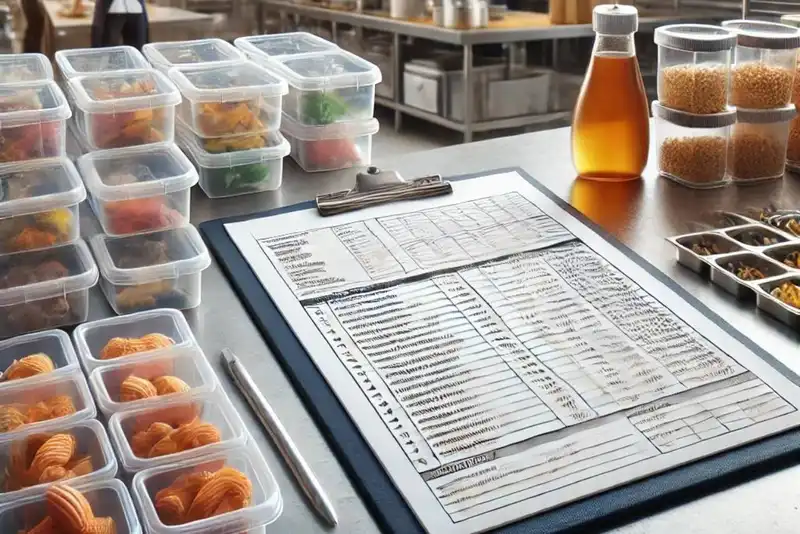
For executive chefs working at scale, ingredient consistency matters more than artisanal storytelling. High-volume catering operates much closer to a manufacturing process than a boutique restaurant kitchen. Recipes cannot scale if the raw materials change shape, weight, or moisture content with every delivery.
Tomatoes must arrive within defined size ranges. Chicken portions must meet precise weight specifications. Vegetables must be graded for predictable yield. If those specifications are not met, portion control collapses and food cost calculations unravel.
This is why the receiving bay becomes one of the most important control points in the entire operation. Every ingredient entering the cold room must meet strict specification sheets agreed with suppliers. Consistency protects margin.
The New Procurement Mindset in Feeding Hospitality
Hospitality procurement is evolving from ingredient sourcing to supply chain engineering. The most profitable operators are not just negotiating prices. They are building systems that guarantee:
-
cold chain integrity
-
predictable ingredient yield
-
supply stability
-
strict product standardisation
Industry innovation around procurement, culinary operations, and hospitality leadership is also highlighted in The Marathon Chef: How Brad Kavanagh Runs South Africa’s Culinary Future, which explores how modern chefs are reshaping professional kitchens.
In a volatile market, the kitchen that controls its supply chain controls its margins.
The Bottom Line
True culinary mastery in high-volume Feeding Hospitality operations is not plating one perfect dish for an influencer. It is delivering five hundred identical plates, perfectly consistent, on a Friday night service. And that level of consistency begins long before the food reaches the kitchen. It begins with procurement.
Your Action Plan
Open your purchasing reports this week and identify the five ingredients you buy in the highest volume. Then calculate their true operational yield, not just their purchase price. Because in large-scale Feeding Hospitality operations, the cheapest ingredient on the invoice is rarely the cheapest ingredient on the plate.


Leave a comment