
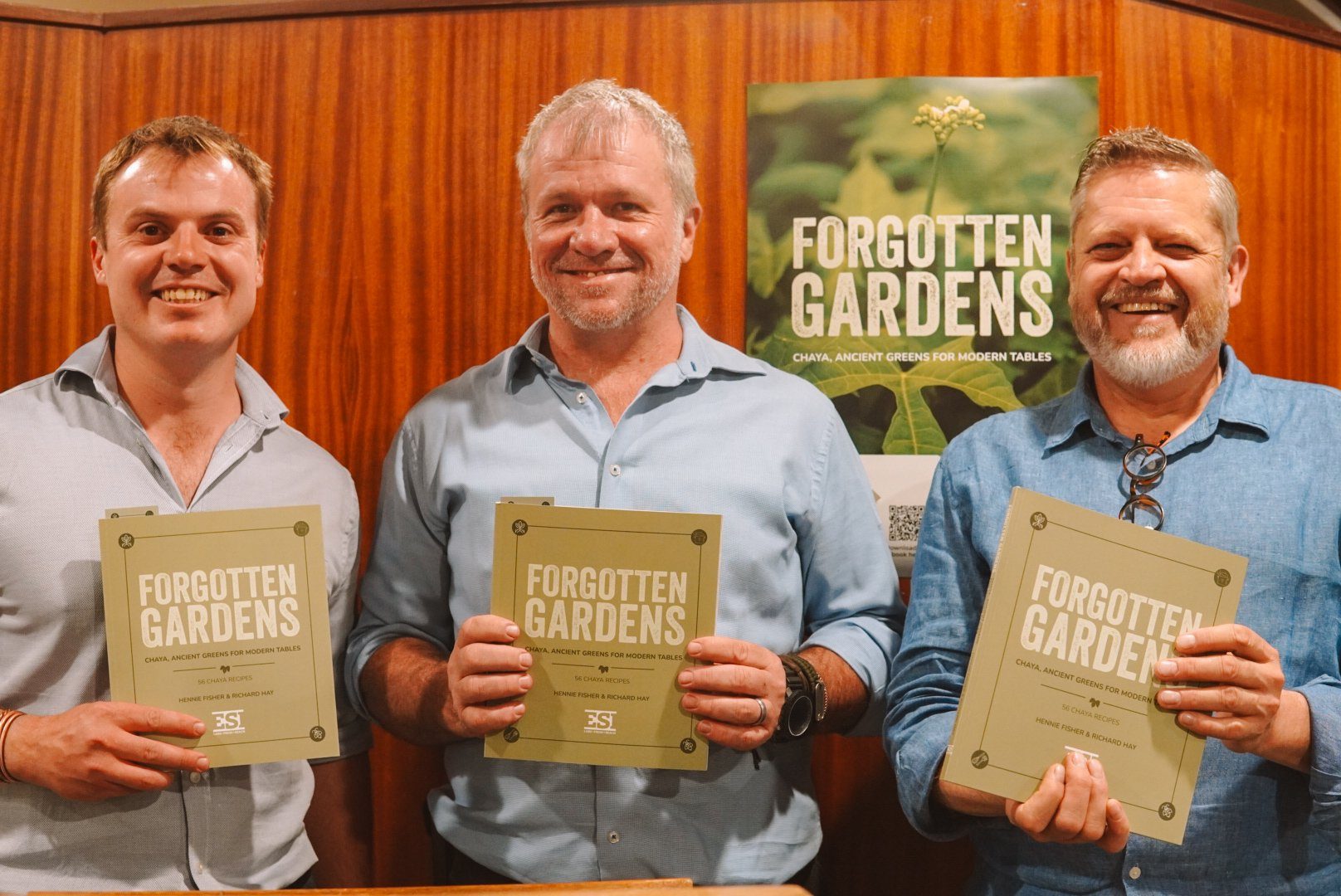
From left: Richard Hay, Jason Sampson and Dr Hennie Fisher with copies of Forgotten Gardens: Chaya, Ancient Greens for Modern Tables, a new UP recipe book showcasing the culinary potential of the underutilised chaya plant. Image: University of Pretoria
Press release issued by the University of Pretoria, 29 October 2026.
PRETORIA – University of Pretoria (UP) Culinary Arts lecturer Dr Hennie Fisher and horticulturist Richard Hay are introducing South African kitchens to chaya – an ancient, underutilised edible plant that offers new possibilities for dietary diversity.
Also known as Mayan tree spinach, chaya (Cnidoscolus aconitifolius) is a fast-growing, drought-resistant shrub native to Central America. It is valued for its nutrient-rich leaves and potential as an alternative to familiar leafy vegetables.

Dr Fisher and Hay have published the first book in a recipe series focused on underutilised edible plant species. Titled Forgotten Gardens: Chaya, Ancient Greens for Modern Tables, the book aims to bring agrobiodiversity into the home kitchen and highlight the potential of forgotten crops.
Developed through a collaboration at UP’s Future Africa Institute, the first book introduces South African readers to chaya, often called the “tree of life”, and demonstrates how forgotten crops could help address declining global agrobiodiversity and modern malnutrition.
“Chaya is a shrub to small tree native to Central and South America, where Indigenous people have eaten its leaves as a vegetable for centuries,” Hay said. “The plant is exceptionally high in protein and various vitamins and minerals, and tastes like conventional Swiss chard, which many South Africans call ‘spinach’.”
It is a perennial plant, which means it can be planted once and enjoyed for many seasons.
“Along with being incredibly nutrient-dense, it is one of the toughest edible plants we have ever grown,” Hay added. “We believe this combination gives chaya great potential for home and community food gardens in South Africa.”
Dr Fisher and Hay worked with final-year Culinary Arts students to develop and test recipes ranging from snacks and main courses to baked goods and drinks. The recipes use chaya as an alternative to familiar leafy greens such as spinach. Each recipe includes cultural and historical context, combining scientific research with practical cooking to highlight the plant’s potential to support food security and dietary diversity in South Africa and beyond.

“Richard and I are both passionate about food,” Dr Fisher said. “Richard focuses more on producing the ingredients, while I focus more on using them, but we both love to eat. We enjoy exploring foods with different textures, flavours, and aromas from diverse cultural backgrounds. Anyone interested in exploring food will naturally seek out unusual or unfamiliar ingredients. That is where chaya comes in. We want to open people’s eyes to the wide variety of unfamiliar and unexplored foods available around the world, rather than relying on the limited selection of familiar ingredients on our commercial shelves.”

Hay and Dr Fisher explained that several factors prevent crops such as chaya from becoming more widely available. These include the challenges of integrating them into food systems built around large-scale mechanisation and long supply chains. They have also encountered resistance from consumers who are reluctant to try unfamiliar ingredients and plant species, particularly those that do not resemble conventional vegetables.
“We hope that pairing freely available planting material from these ‘forgotten’ crops with open-access recipes will encourage more people to grow them in home and community food gardens in South Africa,” Hay said.
Although chaya is not indigenous to South Africa, Hay and Dr Fisher believe it has considerable potential for local food gardens. The recipes reflect the diverse culinary experiences of the students who contributed to the book, and the authors hope readers from different backgrounds will find something to enjoy.

“We hope the book encourages more people not only to incorporate chaya into their diets, but also to become curious about dietary diversity and develop healthier relationships with food,” Dr Fisher said.

The authors acknowledged the contribution of the Manie van der Schijff Botanical Garden and its associated Agrobiodiversity Collection, formerly known as the Indigenous and Orphan Crops Collection, housed at Future Africa.
Kilograms of chaya leaves were harvested from the campus gardens for recipe development and testing. However, the collection and propagation of chaya accessions began years before the book was conceived, as part of the botanical garden’s mandate. Hay and Dr Fisher expressed their gratitude to Jason Sampson, curator of the botanical garden, for his years of work collecting chaya accessions and incorporating them into UP’s collections.
Work on the second instalment of the Forgotten Gardens series is under way, with the authors drawing on additional species from this living collection. They hope to continue their collaboration in future.
Source: University of Pretoria news release, 29 October 2026.

Leave a comment