

Mentorship and diversity are changing the face of the South African wine industry. What was once a closed network is becoming more inclusive, creating room for new brands, new leaders, and new stories. For Vinimark, working with both heritage estates and emerging black-owned labels, this evolution is reshaping the landscape of the wine it brings to market.
For decades, access to wine knowledge and opportunity in South Africa was tightly held, passed on informally through apprenticeships, family networks, and closed circles. For many black South Africans, this meant exclusion not only from ownership but from the knowledge of terroir, varietals, markets, and culture itself.
That narrative is changing. Structured, intentional mentorship is opening doors — and where mentorship meets ownership, the results are transformational. SA Wine’s Phil Bowes notes that the sector now supports 107 black-owned wine brands, a rise of 50% in just ten years, alongside 81 black-owned farms spanning grape production, logistics, and retail. More than the numbers, it’s about capability: a new generation of technically skilled owners, producers, and professionals shaping a more diverse industry.
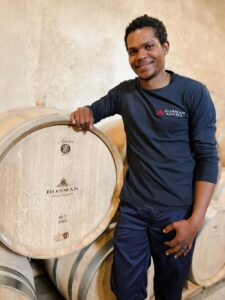 Ownership in Action: Bosman Family Vineyards & Adama Wines
In Wellington, Bosman Family Vineyards is home to South Africa’s largest black-owned wine company, Adama Wines, where workers own 26% of the agribusiness. Among them is Riedewaan Thomas, who began as an intern and is now a cellar leader. Selected for the prestigious Burgundy Exchange Programme, he is working towards his goal of becoming Bosman Adama’s first male winemaker — a testament to how mentorship and opportunity can break down long-standing barriers.
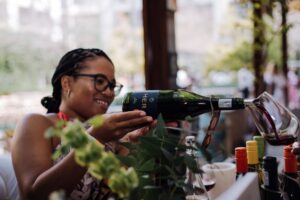 Representation with Purpose: HER Wine Collection
Founded in 2020 by Praisy Dlamini, HER Wine Collection is South Africa’s first all-women, all-black wine brand. Dlamini’s own path — from Elsenburg to Cape Winemakers Guild Protégé — instilled resilience and adaptability. HER’s “Students for Change” initiative now funds bursaries for matriculants from farming communities and connects them to professionals across the wine value chain, with 2% of profits reinvested into education and mentorship. Today, Dlamini also serves as General Manager of Adama Wines, linking two models of transformation while creating new ones for others to follow.
Full-Circle Empowerment: Visio Vintners
Visio Vintners, born from a partnership between Kleine Zalze Wines and its empowerment trust, is majority-owned (51%) by the trust, with all Kleine Zalze workers as beneficiaries. Here, quality leads the way. Winemaker Hanri Ferreira insists, “We want the wine to stand on its own” — and it does. Visio’s Icon Wine blend scored 92 points from UK critic Tim Atkin and a 4.5-star Platter’s rating, proving that empowerment brands can compete at the highest level.
Systemic Support: Building Infrastructure for Change
These stories don’t stand alone. They’re underpinned by systemic support that strengthens the foundation for transformation:
-
R23.8 million invested into enterprise development, training, and ethical trade programmes (SA Wine, 2024)
-
Over 1,800 direct beneficiaries, including 545 youth
-
The Wine Arc incubator, home to 13 black-owned brands
-
2,217 learners enrolled in 170 programmes via the wine industry’s Learner Management System
Such investment, paired with the market access offered by distributors, helps ensure that transformation stories are not isolated successes but part of a growing, sustainable movement.
The wine industry’s future is being shaped by people whose stories of resilience, mentorship, and ownership are rewriting its history. It’s not just about producing exceptional wine; it’s about building an ecosystem where diverse voices and businesses can thrive. Distributors, producers, and industry bodies all share a role in sustaining this momentum — and Vinimark’s partnerships across both heritage estates and emerging brands show how this change is being carried into practice.

Leave a comment