
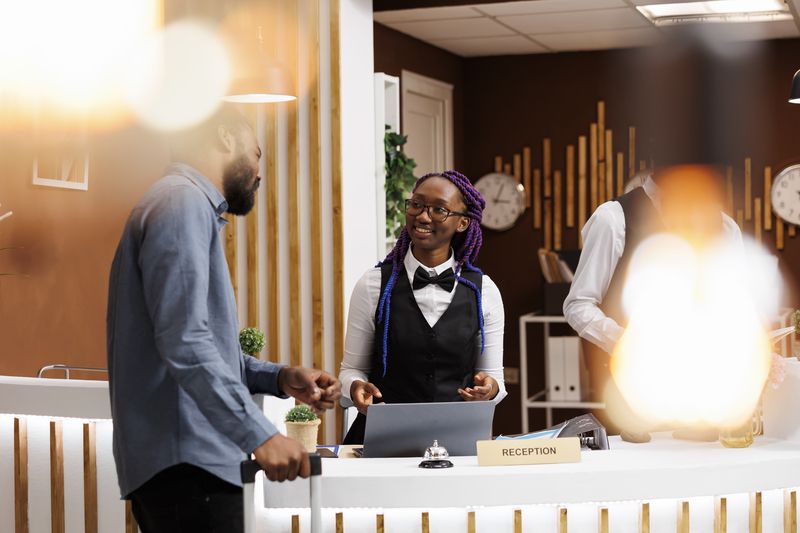
Few industries offer the kind of immediate, human connection that tourism does. At its best, it’s a celebration of culture, community, and shared experience—something machines can’t replicate, no matter how advanced. For South Africa, it also represents one of the most accessible avenues for empowerment and economic participation, especially for women and youth.
“Tourism is more than just travel – it is storytelling, culture, connection, and care. These are human elements that cannot be replicated by artificial intelligence,” says Dominique van Wezop, General Manager of the Radisson Hotel OR Tambo. “It is the smiles, the voices, the shared experiences that create lifelong memories. That’s why the heart of tourism will always be people.”
Women already make up over half of the global tourism workforce, according to the UNWTO, yet their presence at senior levels remains sparse. Only 23% of tourism ministers worldwide are women—a gap that reflects both challenge and opportunity. The sector’s diversity, spanning everything from eventing and eco-tourism to hotel management and digital nomad services, lends itself to flexible, people-driven leadership. For many women, it’s a space where soft skills become strategic assets.
South Africa’s youth, meanwhile, are staring down one of the highest unemployment rates in the world. Yet in tourism, there’s a rare convergence of accessibility and ambition. With relatively low barriers to entry and a global stage for innovation, the industry invites young people to shape it, not just serve it. “Young people bring fresh energy, digital fluency, and creative thinking – all essential to reshaping African tourism for the future,” adds van Wezop. “We need them not just to work in tourism, but to lead it.”
Beyond its economic benefits, tourism plays a subtle but powerful role in nation-building. It creates jobs in both cities and rural communities, fosters cross-cultural understanding, and encourages sustainable development rooted in local pride. From the vineyards of the Cape to the bushveld lodges of Limpopo, tourism weaves South Africa’s story into a global narrative.
And while AI and automation continue to redefine service across sectors, hospitality remains deeply human. A chatbot might book your stay, but it can’t welcome you with warmth or offer the cultural nuance of a local guide. “Technology will support the industry, but people will always define it,” says van Wezop.
In a world increasingly shaped by algorithms, tourism stands out as one of the last industries where people are not only essential—but irreplaceable.


Leave a comment