

By Dan Morgan-Williams, Founding Director of Visualise Training and Consultancy
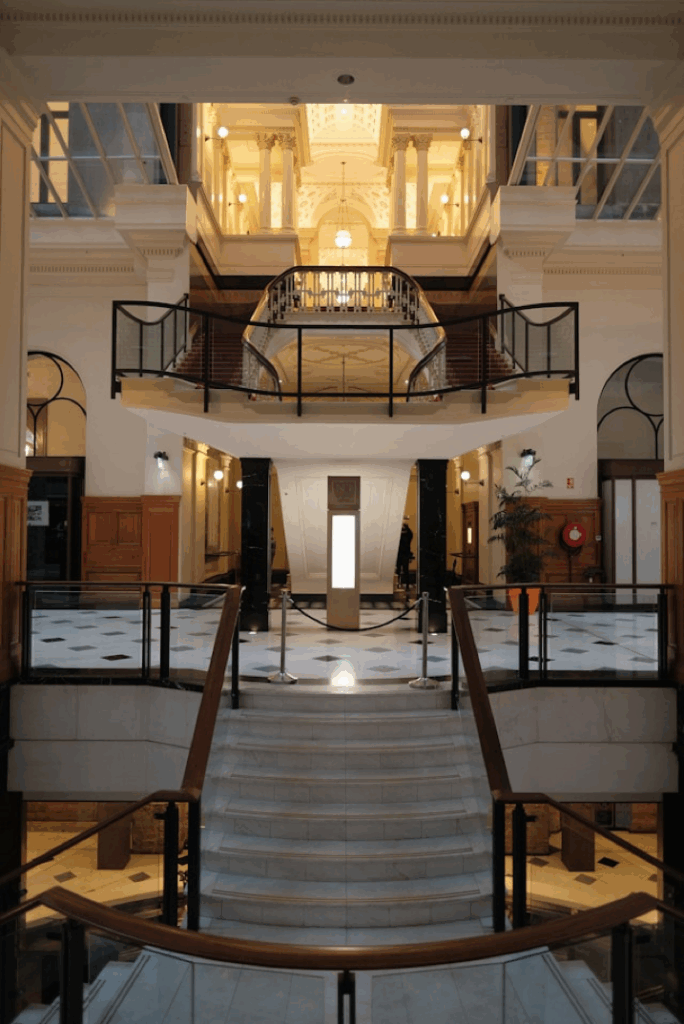
I’ve always loved the idea of luxury hotels. The grand entrances, the marble floors, the carefully chosen scents in the lobby –
all designed to impress. Yet for me, as someone living with sight loss, those same spaces can feel daunting.
Luxury can quickly turn into anxiety when I’m unsure how to get from reception to my room, or when staff don’t know how to help me
without making it awkward. What I want to share is not a complaint, but a story – a story of how small details and confident staff
make the difference between feeling excluded and feeling like a valued guest. And perhaps along the way, I can show that
accessibility doesn’t need to compromise beauty – it can actually enhance it.
Arrival: The First Impression
Arriving at a luxury hotel is an experience in itself. The doorperson greets me, the lobby glistens with polished marble, and there is often live music from a piano in the corner. For many, this is a moment of excitement. For me, there’s also an edge of anxiety: “Will I find reception easily? Will someone offer me guidance? Or will I be left to stumble awkwardly in this grand space?”
In one hotel, I remember being dropped off at the entrance and standing uncertainly while staff hurried past me. No one asked if I needed help. Eventually, I guessed my way across the vast lobby, feeling eyes on me as I tapped with my cane. That’s not the memory a hotel wants to leave a guest with.
By contrast, at another property, a staff member immediately approached with a warm smile. They didn’t grab my arm or make
assumptions. They simply asked: “Would you like some assistance to reception?” That question gave me the choice. It was respectful, professional, and reassuring. It cost nothing, yet it transformed my first impression.
Check-In: Setting the Tone
The front desk is where the guest relationship begins. Sadly, I’ve often been spoken about rather than spoken to. A receptionist once directed questions to my friend instead of me, assuming I couldn’t answer for myself. It was awkward and undermining.
A better experience is when staff take time to speak directly, clearly, and naturally. A receptionist who says, “Let me guide you to the desk, and I’ll explain the layout as we go,” not only reduces stress but also sets the tone for the stay. Good communication is about respect, not pity.
Finding the Room: Orientation Matters
Corridors in large hotels can be endless. Being told, “Your room is just down there on the left,” is meaningless to me. I once spent ten minutes walking back and forth, counting doors nervously, unsure if I was in the right place—the anxiety built with every wrong door.
The best experience I had was when a porter walked me to my room and then spent a few minutes showing me around. He described where the bed was, where the wardrobe stood, and how to find the bathroom. He pointed out the fire exit – a crucial detail for me, as many blind guests use it as a landmark. He even demonstrated the heating controls and made sure I could operate the lighting. Those few minutes meant I could relax immediately instead of battling frustration. That, to me, is luxury.
Inside the Room: Details Matter
Rooms in five-star hotels often showcase the latest technology. Unfortunately, touch panels without tactile buttons, TV remotes with tiny labels, or glossy welcome packs in small print can all become barriers. I’ve stayed in suites where I couldn’t even order room service without help.
But accessibility doesn’t need to be clinical. I’ve also stayed in hotels that provided large-print information, offered a digital copy of the guest directory compatible with screen readers, and had staff happily walk me through how to use in-room tech. One hotel even placed a water bowl in the room for my guide dog – a small gesture,
but one that told me they had thought about me as an individual guest. That’s inclusion, and it looks and feels like luxury.
Dining: Where Inclusion Shines
Food is often the highlight of a hotel stay. But imagine being handed a menu in tiny script and left struggling to guess what’s on offer. The embarrassment of having to ask staff to read it out, while fellow diners listen, can quickly sour a fine-dining experience.
In contrast, I’ve also been in restaurants where the staff immediately asked, “Would you prefer a large-print menu or for me to read through the options with you?” That simple choice turned potential discomfort into dignity.
Another restaurant asked where I’d like to sit: near the window for brightness, or further in if I had light sensitivity. The thoughtfulness was seamless and subtle, blending accessibility with personalised luxury service.
 Public Spaces: Confidence Counts
Moving through spas, pools, and conference areas can be overwhelming. Staff often don’t know whether to step in, so they avoid approaching altogether. This creates social awkwardness that is easily avoided with training.
The best encounters are when staff confidently offer assistance without fuss: “Would you like me to describe the layout of the spa for you?” or “Can I guide you to the pool steps?” Clear, confident offers reduce anxiety and make me feel welcome.
Checkout: The Lasting Impression
Checking out should be smooth. Too often, it involves touchscreen kiosks or staff rushing the process. I’ve left hotels feeling more like a transaction than a valued guest.
But the best experiences mirror the welcome: staff taking time to explain the bill, guiding me through the process, and asking if I’d like a taxi called. That final impression determines whether I’ll return – and whether I’ll recommend the hotel to others.
Accessibility as Elegance
Some managers worry that accessibility means ugly add-ons: bright yellow strips, clunky signage, institutional-looking features.
But good design shows otherwise. Textured flooring can be beautiful and discreet. Lighting can be elegant yet reduce glare. Menus can be presented in leather-bound large-print or elegant digital formats. Accessibility and luxury are not opposites – they are partners in creating exceptional spaces.
Think of lifts: originally introduced for wheelchair users, now used and appreciated by everyone. Designing for the minority often benefits the majority.
The Business Case
Beyond guest satisfaction, there is a clear business case. According to the World Health Organisation, 2.2 billion people live with vision impairment globally, and in the UK alone, there are over two million people with sight loss.
This is a significant market. Studies in Europe have valued accessible tourism at over €88 billion annually. When hotels are inclusive, they not only welcome more guests but also build loyalty and reputation.
A visually impaired guest who feels respected is more likely to return, recommend, and share positive stories. That kind of publicity is priceless.
Training as Empowerment
The common thread through all of this is people. Most staff want to help but don’t know how. That uncertainty breeds awkwardness.
Awareness training is not about criticism – it’s about empowerment. Training gives staff the confidence to offer help naturally,
to ask rather than assume, and to provide service that feels effortless. It removes the guesswork and replaces it with confidence.
For managers, this isn’t about adding another tick-box to compliance. It’s about giving their teams the tools to deliver flawless service to every guest. And that is the essence of true luxury.
Conclusion: Luxury Means Belonging
When I reflect on my stays, the difference between anxiety and ease has always been the people and the details.
Luxury is not just chandeliers and Michelin stars – it is being able to relax, knowing my needs have been anticipated with dignity and thought. For visually impaired guests, inclusion is the most incredible luxury of all.
Hotels that embrace visual awareness are not only meeting a need – they are setting the benchmark for excellence in the industry.
And for those who want to turn these principles into practice, Visual Impairment Awareness Training offers a clear path.
It equips staff with the knowledge and confidence to deliver service that is seamless, elegant, and inclusive – the kind of service that defines luxury in the truest sense.
Daniel Morgan-Williams
Visualise Training and Consultancy Ltd was established in 2014 by Daniel Morgan-Williams, who founded the company despite gradually losing vision due to retinitis pigmentosa.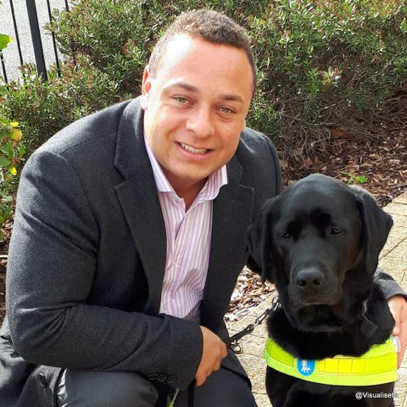
Daniel’s motivation to start the business arose from his experiences of a lack of accessibility and inclusion within workplaces and broader society. This affects people with sight loss, hearing loss, tinnitus, and those who are Deaf. Many disabilities are hidden, so they are not easily recognised.
What began as a focused approach centred on sight loss and its associated challenges has since grown to encompass all forms of sensory loss. This enables employees to develop their careers through workplace assessments that recommend reasonable adjustments and provide colleagues with awareness training.
To find out more, visit https://visualisetrainingandconsultancy.com