

Food
Kobus van der Merwe: Indigenous Intelligence in Practice
Philosophy of indigenous ingredients
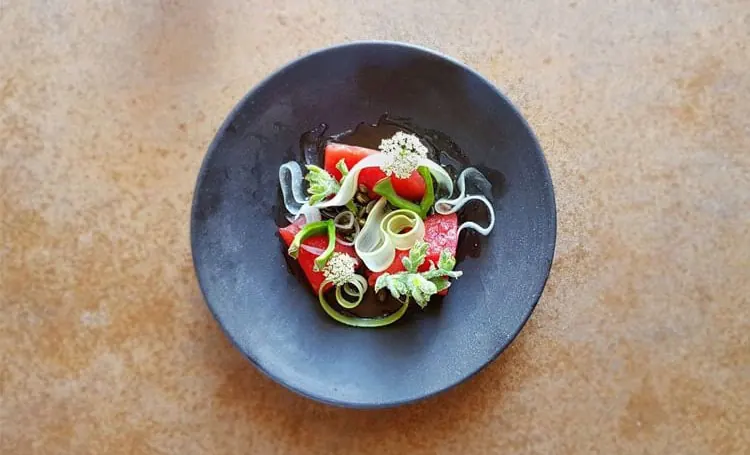
The work of Kobus van der Merwe at Wolfgat represents a fundamental shift in the South African culinary narrative. We have moved beyond the superficial garnishing of plates with local weeds toward a deep, technical integration of our landscape. Van der Merwe’s philosophy is rooted in indigenous intelligence, a discipline that treats the West Coast as a primary source of complex seasoning. By harvesting only what the immediate ecosystem provides within a specific seasonal window, the plate becomes an honest, raw reflection of the terroir. It is a direct challenge to the traditional European reliance on imported aromatics, proving that our biomes speak a sophisticated culinary language.
Global recognition and local growth
The impact of this approach is validated by global benchmarks. When Wolfgat was named Restaurant of the Year at the World’s 50 Best Restaurant Awards, it signalled to the global culinary community that South Africa’s hyper-local, foraged cuisine is a world-class standard.

This movement is reflected in shifting consumer behaviour and economic data:
- There is a growing appetite for heritage flavours, with the South African ethnic food market projected to see continued growth as more diners prioritize authenticity and local origins.
- Research shows that over 50 percent of South African consumers now actively seek out locally sourced products, a trend that is forcing a major rethink of supply chain logistics in professional kitchens.
- The bioprospecting industry in South Africa, which includes the commercial use of indigenous plants, contributes significantly to the national economy, highlighting the untapped potential of our wild flora for professional culinary use.


Technical applications of wild flora
Technical mastery requires an understanding of the cellular architecture of our wild flora. For a professional chef, ingredients like Soutslaai and dune spinach are more than just food; they are structural components.
- Soutslaai (Mesembryanthemum crystallinum): Managed with extreme precision to protect its water-storing bladder cells. This ensures a singular crystalline crunch and a naturally occurring salinity.
- Dune Spinach (Tetragonia decumbens): Utilized for its thick, succulent leaves that offer a distinct mineral profile, allowing chefs to reduce added sodium levels without losing umami.
- Coastal Succulents: High saline content is being leveraged as a natural seasoning tool to enhance the inherent flavour of local proteins.


Innovative preparation methods
Preparation has moved toward capturing volatile oils through modern extraction, moving away from the bitterness of traditional boiling toward precision methods.
- Vacuum Infusion: Used for aromatics like Buchu to capture bright, herbaceous notes without the astringency.
- Low-Temperature Oil Extraction: Isolating the essence of Kapokbos to create stable, reproducible flavour profiles for high-pressure service.
- Fermentation and Dehydration: Foraged seaweeds are being processed into concentrated seasoning powders, serving as local alternatives to dashi or miso.
The adoption of indigenous intelligence is a move toward supply chain resilience. By building menus around the tactile reality of the local environment, chefs reduce their dependence on broadline distributors and heavy logistics. This creates an agile form of menu development where the landscape dictates the dish. The result is a singular South African culinary identity that is technically rigorous, geographically authentic, and globally competitive.
Our culinary future is not found in distant ports but in the soil beneath our feet and the salt on our shores. By mastering our own environmental context, we are not just cooking; we are claiming our place at the global table. We are finally learning to trust the wisdom of the land that has always fed us.